
What's Happening?
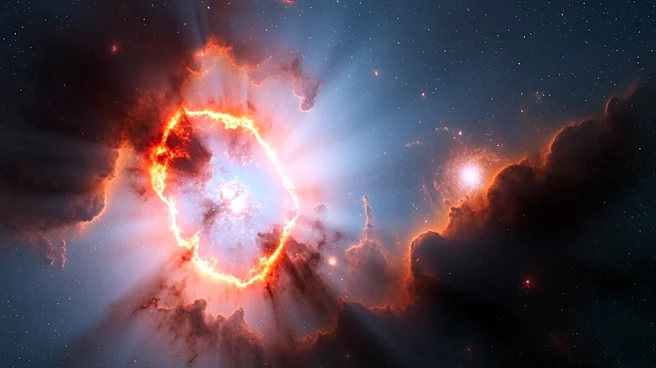
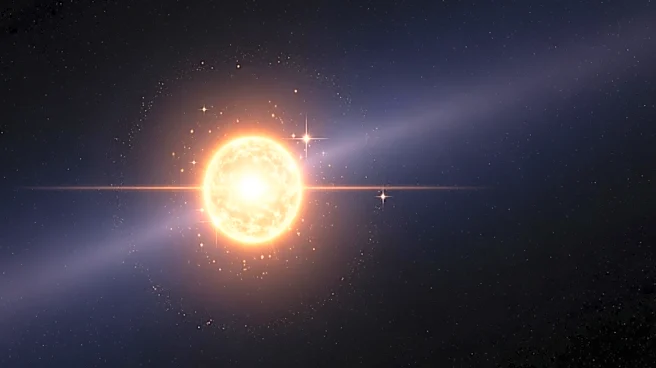
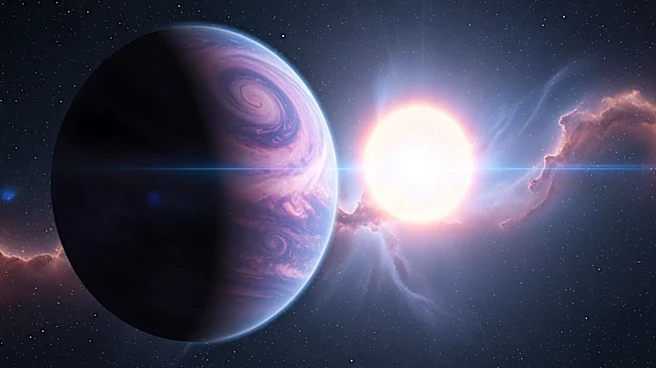
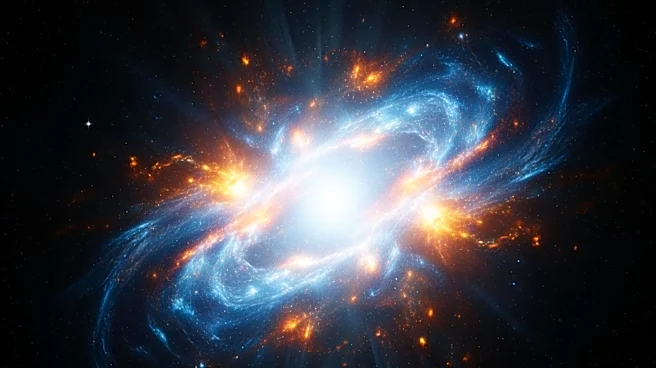
Astronomers at the Austrian Institute of Science and Technology (ISTA) have identified a new class of supernova remnants, consisting of two objects named 'Gandalf' and 'Moon-sized.' These remnants are
characterized by their high magnetic fields, rapid rotation, and X-ray emissions, despite lacking companion stars. The discovery was led by Ilaria Caiazzo and her team, who confirmed the presence of X-ray signals in these isolated objects. The remnants are believed to be 'merger remnants,' formed from cosmic collisions, and exhibit unique properties that distinguish them from typical supernova remnants.
Why It's Important?
The identification of 'Gandalf' and 'Moon-sized' as a new class of supernova remnants challenges existing theories about stellar evolution and the formation of remnants. These findings could lead to a deeper understanding of the processes involved in cosmic collisions and the behavior of magnetic fields in isolated stellar objects. The discovery also opens up new avenues for research into the lifecycle of stars and the mechanisms behind X-ray emissions in the absence of companion stars, potentially impacting astrophysical models and theories.
What's Next?
Further research is needed to explore the implications of these findings and to understand the formation and characteristics of these merger remnants. Scientists may conduct additional observations and simulations to investigate the magnetic activity and rotational dynamics of 'Gandalf' and 'Moon-sized.' The study of these objects could provide insights into the evolution of isolated stellar remnants and contribute to the development of new models in astrophysics.
Beyond the Headlines
The discovery of these unique supernova remnants raises questions about the role of magnetic fields and cosmic collisions in shaping the universe's structure. It also highlights the importance of interdisciplinary research in astrophysics, combining observational data with theoretical models to uncover new phenomena. The findings may influence future studies on the interaction between magnetic fields and stellar remnants, offering a broader perspective on the complexities of cosmic evolution.