





What's Happening?
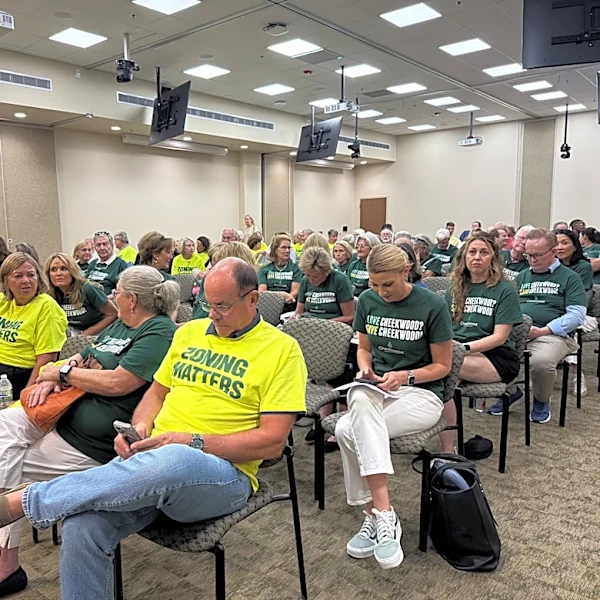
Approximately 250 Santa Cruz residents gathered to express opposition to a proposed housing development at 1214 Soquel Ave. in the Seabright neighborhood. The site, currently home to businesses like Ace Hardware and The Bagelry, is under contract for
purchase by local developer Workbench. Workbench filed a pre-application with the city of Santa Cruz on July 16, outlining two potential concepts: a 281-unit 100% affordable housing project or a 173-unit senior living facility, both including 5,000 square feet of commercial space. Mayoral candidates Ryan Coonerty and Ami Chen Mills have voiced strong opposition, citing concerns about the displacement of existing businesses, potential exacerbation of traffic congestion due to the Murray Street Bridge closure, and the loss of the area's current vibrancy and walkability. Workbench acknowledges the early conceptual nature of the designs and plans to continue outreach efforts with neighbors and stakeholders.
Why It's Important?
This development highlights the ongoing tension between addressing housing shortages and preserving community character and existing local businesses in U.S. cities. The potential displacement of established businesses like Ace Hardware and The Bagelry could significantly alter the economic and social fabric of the Seabright neighborhood, impacting local employment and access to services. The debate also underscores challenges in urban planning, particularly regarding infrastructure strain, as residents worry about increased traffic in an already congested area. The involvement of mayoral candidates indicates that local development projects are becoming central issues in municipal politics, reflecting broader public concern over how growth is managed and who benefits from it. The project's designation for higher-density housing through a public planning process also brings to light the complexities of balancing state housing requirements with local community desires.
What's Next?
Workbench plans to continue its outreach efforts, including meeting with existing tenants and holding a community meeting to gather further feedback. The developer will also refine the design concepts based on these discussions. Following this, if Workbench decides to proceed with one of the concepts, it will submit a formal application for city review. This will initiate a permitting process and a public hearing, providing additional opportunities for community input and official deliberation. Mayoral candidate Ryan Coonerty has indicated that if elected, he would explore ways for the city to push back against state housing requirements, suggesting potential policy changes that could influence future development projects in Santa Cruz. Residents are encouraged to organize and voice their concerns throughout these upcoming stages.
Beyond the Headlines
The Seabright development controversy reflects a national struggle in many U.S. communities to reconcile the need for increased housing, particularly affordable housing, with the desire to maintain local character and support existing small businesses. This situation raises questions about the long-term economic viability of small, independent businesses in rapidly developing urban areas and the effectiveness of current zoning and planning processes in balancing diverse community needs. The ethical dimension involves the potential displacement of long-standing businesses and residents, and the cultural impact of transforming a vibrant commercial plaza into a high-density residential complex. It also highlights the power dynamics between developers, local government, and community groups, and how these interactions shape the future of urban landscapes. The outcome in Santa Cruz could set a precedent for how similar development challenges are addressed in other U.S. cities facing similar pressures.