







What's Happening?
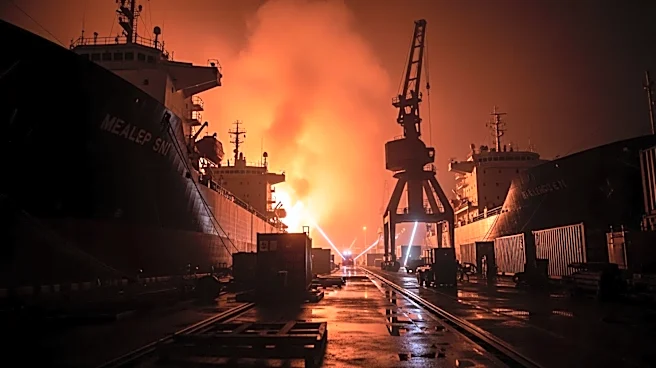
A devastating incident occurred at a New York City shipyard on Staten Island, where a fire and two subsequent explosions resulted in the death of one civilian and injuries to 36 individuals, primarily firefighters and first responders. The incident unfolded
on Friday afternoon when multiple calls reported smoke and trapped workers in a metal structure at the shipyard. Firefighters arrived promptly, but a first explosion caused significant injuries, followed by a second blast that further endangered those on the scene. The fire marshal and a firefighter were critically injured, with the fire marshal suffering a fractured skull and brain bleed. The fire, although under control, continued to burn into the night, with over 200 firefighters managing the situation. A comprehensive investigation into the cause of the fire is underway.
Why It's Important?
This incident highlights the inherent dangers faced by first responders during emergency situations, particularly in confined spaces. The injuries sustained by the firefighters underscore the risks involved in rescue operations and the potential for severe consequences. The event also raises concerns about safety protocols and emergency preparedness in industrial settings, especially those involving hazardous materials or confined spaces. The impact on the local community is significant, as the shipyard is a historical site with ties to the U.S. Navy, and the incident has disrupted nearby businesses and residents. The response and recovery efforts will be closely watched as they may influence future safety regulations and emergency response strategies.
What's Next?
The investigation into the cause of the fire and explosions will be a critical next step, with findings potentially leading to changes in safety protocols and regulations for similar industrial sites. The condition of the injured first responders, particularly the fire marshal and firefighter, will be monitored closely, with their recovery being a priority. The incident may prompt discussions among city officials and emergency services about improving safety measures and training for handling such emergencies. Community support and resources may be mobilized to assist those affected by the incident, including the families of the injured and deceased.