
What's Happening?
The Department of Homeland Security (DHS) is facing a partial shutdown due to stalled negotiations between the White House and congressional Democrats over immigration policy reforms. The shutdown, set to begin at 12:01 a.m., will affect approximately
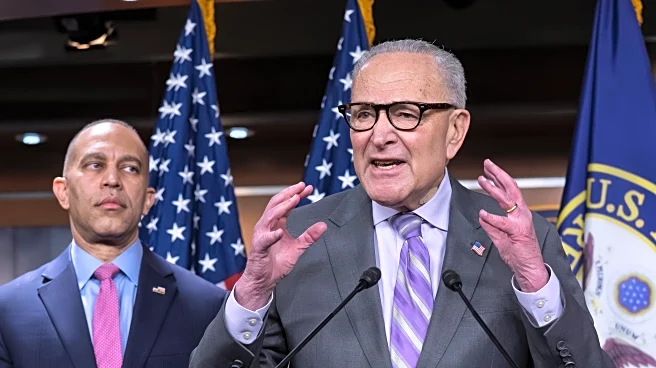
13% of the federal civilian workforce, although most DHS employees are required to continue working without pay. Democrats have demanded new restrictions on federal immigration agents, including tighter rules on warrants and mandatory body cameras, in exchange for funding DHS. Despite the shutdown, operations of Immigration and Customs Enforcement (ICE) and Customs and Border Protection will continue, as these agencies received additional funding last year. The Senate adjourned for a recess without reaching a funding agreement, and House Minority Leader Hakeem Jeffries criticized Speaker Mike Johnson for not keeping lawmakers in Washington to negotiate. The shutdown will primarily impact other DHS agencies, such as the Transportation Security Administration and the Coast Guard.
Why It's Important?
The partial shutdown of DHS highlights ongoing tensions between Democrats and Republicans over immigration policy. The demand for reforms in federal immigration enforcement reflects broader concerns about the tactics used by ICE and other agencies. The shutdown could strain DHS employees who are required to work without pay, affecting morale and operational efficiency. The situation underscores the political divide over immigration, with Democrats pushing for accountability measures and Republicans emphasizing border security and deportations. The shutdown may also impact public perception of government effectiveness, as essential services are disrupted. The broader implications include potential shifts in immigration policy and enforcement practices, which could affect communities across the U.S.
What's Next?
Negotiations are expected to continue as both parties seek a resolution to the funding impasse. Senate leaders have indicated they will return to Washington if a deal is struck, and Democrats are preparing a response to the White House's counterproposal. The shutdown could lead to increased pressure on lawmakers to find common ground, particularly as public scrutiny intensifies. The outcome of these negotiations may influence future immigration policy and funding decisions, with potential impacts on federal agencies and affected communities. Stakeholders, including civil rights groups and local governments, may become more vocal in advocating for changes to immigration enforcement practices.
Beyond the Headlines
The shutdown raises ethical and legal questions about the balance between national security and civil liberties. The demand for body cameras and restrictions on federal agents reflects concerns about transparency and accountability in law enforcement. The situation may prompt discussions about the role of federal agencies in immigration enforcement and the need for oversight. Long-term shifts in policy could emerge from these debates, potentially influencing the broader landscape of immigration in the U.S. The shutdown also highlights the challenges of governing in a polarized political environment, where compromise is often elusive.