




What's Happening?
A major deforestation project in Crowsnest Pass, Alberta, has been temporarily halted after an activist, Mike Judd, stood in the path of a construction crew. The crew, hired by West Fraser Timber, was preparing to install a bridge on Alison Creek as part
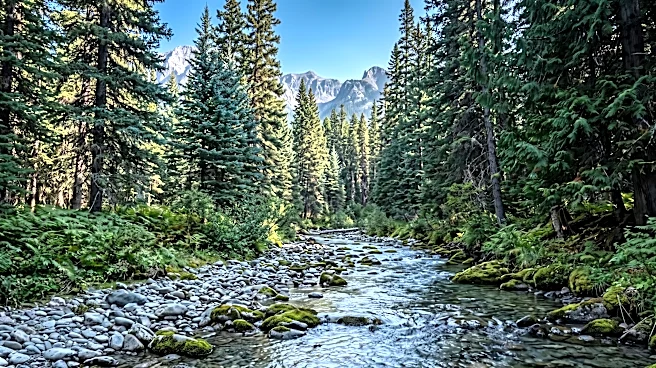
of a plan to clearcut 1,100 acres of the Tecumseh Forest. Judd, a long-time guide in the area, intervened to prevent the immediate progression of the project. Colin Smith of Defenders of the Eastern Slopes questions the provincial government's justification of the clearcut for fire protection, citing the distance between the proposed clearcut and the nearest municipality. The Tecumseh Forest is described as a rare ecosystem, home to diverse tree species like Limber Pine, White Bark Pine, Ponderosa Pine, and Western Red Cedar, and is located near the headwaters of the Old Man River, a crucial water source for southern Alberta municipalities. Alison Creek, within the clearcut area, is also a habitat for the endangered Westslope Cutthroat trout.
Why It's Important?
This incident highlights growing tensions between resource extraction industries and environmental conservation efforts in ecologically sensitive regions. The proposed clearcut by West Fraser Timber, expedited by the Government of Alberta, raises concerns about the transparency and scientific basis of such projects, particularly regarding their stated purpose of fire protection. The area's ecological significance, including its rare tree species and endangered fish populations, underscores the potential for irreversible environmental damage. Furthermore, the clearcut's proximity to the Old Man River headwaters could impact water quality and supply for numerous southern Alberta communities. The lack of public consultation, as alleged by local residents and activists, suggests a potential disregard for community input and local environmental knowledge, which could lead to increased public opposition and legal challenges against similar projects in the future.
What's Next?
Defenders of the Eastern Slopes have formally requested that West Fraser and the provincial government provide comprehensive hydrological and ecological assessments, as well as the scientific data supporting the clearcut's justification as a fire guard. Discussions are planned to inform local residents about the potential impacts of West Fraser's actions. Colin Smith has vowed that his group will continue to oppose the plan, asserting that the Government of Alberta is enabling rapid resource extraction without adequate public say. While the immediate installation of the bridge was delayed, the broader clearcutting project remains a point of contention. The activists' temporary success in delaying the bridge installation is seen as a small victory in a larger ongoing effort to preserve the forest, indicating continued resistance and advocacy from environmental groups and local communities.
Beyond the Headlines
The confrontation in Crowsnest Pass reflects a broader societal debate about the balance between economic development, resource management, and environmental stewardship. The government's justification of the clearcut for fire protection, questioned by environmental groups, points to potential misuses or misinterpretations of environmental regulations to facilitate industrial activities. This situation also brings to light the vulnerability of unique ecosystems and endangered species to large-scale industrial projects. The reliance on individual acts of civil disobedience, like Mike Judd's, to draw attention to these issues underscores a perceived failure of established regulatory and consultative processes to adequately address public and environmental concerns. The long-term implications could include increased scrutiny of resource extraction permits, greater demands for independent environmental impact assessments, and a potential shift in public policy towards more stringent environmental protections and community involvement in land use decisions.