
What's Happening?
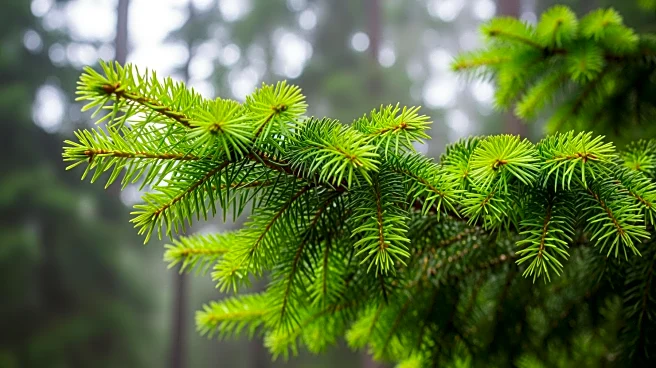
Research led by Forest Research is exploring the suitability of 17 coniferous species for future timber production in the UK. The study, conducted across nine large-scale experiments, highlights the Douglas
fir as a promising alternative to the Sitka spruce, particularly in the south and east of the UK where the climate is expected to become hotter and drier. The trials, in partnership with Forestry England and Forestry and Land Scotland, show that many of the tested species are performing well, with some exceeding expectations. The research aims to address the risks associated with the UK's reliance on a narrow range of tree species for commercial timber production.
Why It's Important?
The potential replacement of Sitka spruce with Douglas fir and other species could significantly impact the UK's forestry industry. As climate change and pest threats increase, diversifying tree species is essential for maintaining timber production and forest health. This research supports efforts to reduce the risks associated with monoculture forestry and could lead to more resilient and sustainable forest ecosystems. The findings may influence forestry management practices and policies, promoting greater species diversity in commercial forestry.
What's Next?
The interim results of the trials will inform future decisions on species selection for commercial forestry. Continued research and monitoring will be necessary to assess the long-term viability of these species under changing environmental conditions. The forestry sector may need to adapt its strategies to incorporate a wider range of species, potentially leading to changes in planting practices and timber production methods.