





What's Happening?
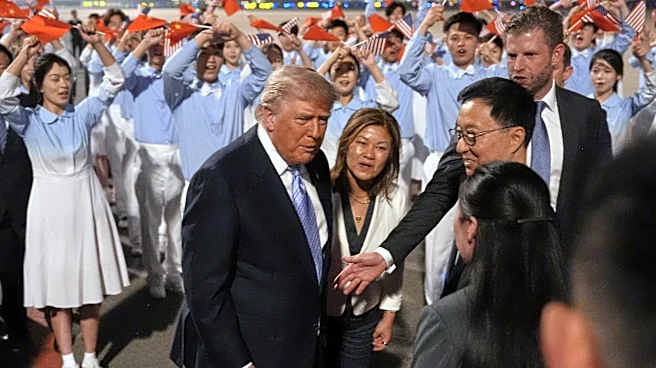
During a recent visit to China, President Trump engaged in discussions with Chinese President Xi Jinping, resulting in preliminary agreements on tariffs, agriculture, and aircraft. The Chinese commerce ministry described these deals as initial steps,
with further negotiations required to finalize details. The agreements include the establishment of investment and trade boards to negotiate tariff reductions and address non-tariff barriers. Specific issues such as the automatic detention of dairy and aquatic products, and market access for agricultural goods were highlighted. Additionally, China agreed to address U.S. concerns regarding beef facility registration and poultry exports. The ministry did not provide specific details on the companies involved or the timeline for these agreements.
Why It's Important?
The preliminary nature of these agreements underscores the complexity of U.S.-China trade relations. The discussions aim to address long-standing trade imbalances and market access issues, which are critical for both economies. For the U.S., resolving these issues could enhance export opportunities for American agricultural and aircraft industries, potentially boosting economic growth and job creation. For China, addressing U.S. concerns could lead to improved trade relations and access to American markets. However, the lack of concrete timelines and details raises questions about the immediate impact of these agreements.
What's Next?
Further negotiations are expected to finalize the details of these preliminary agreements. Both countries will likely continue discussions to resolve outstanding issues and establish clear timelines for implementation. The outcome of these negotiations could influence future trade policies and economic relations between the U.S. and China. Stakeholders in the agricultural and aircraft industries will be closely monitoring developments, as the final agreements could significantly impact their operations and market strategies.