




What's Happening?
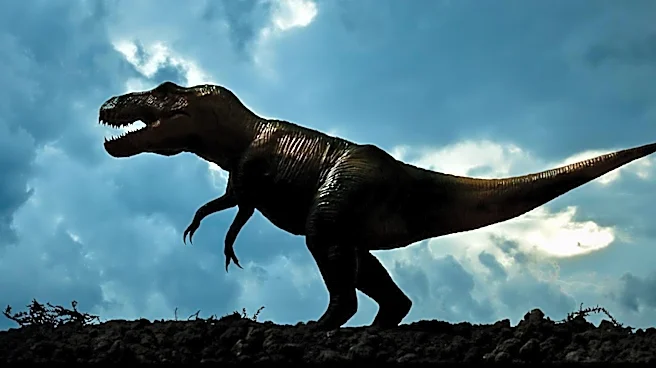
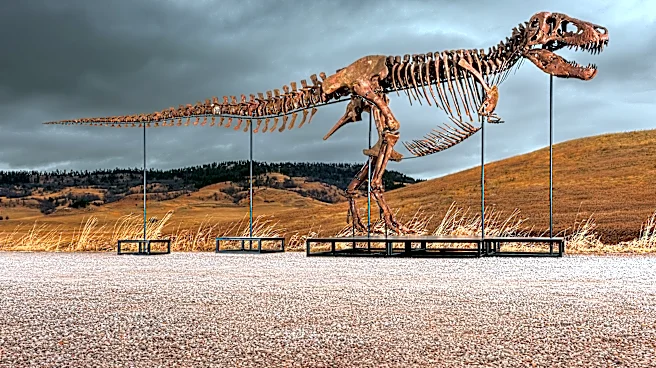
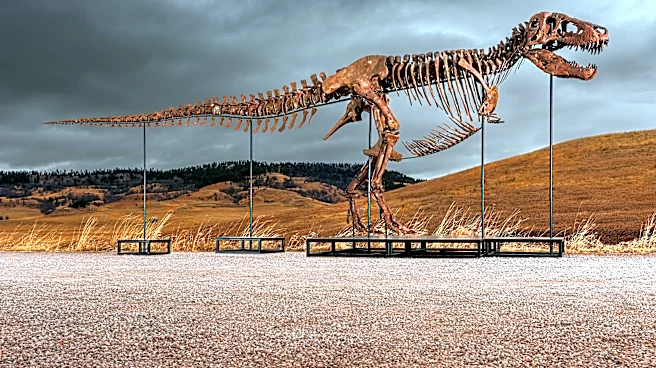
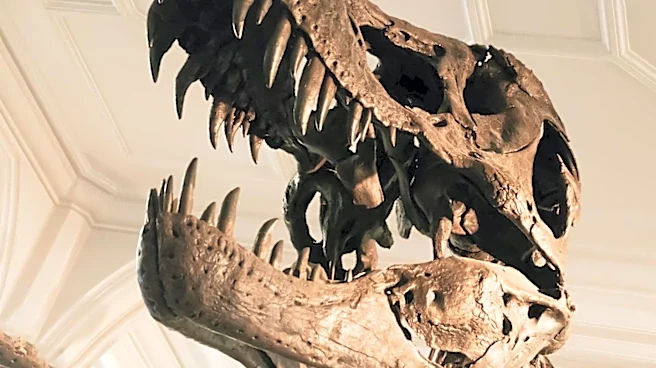
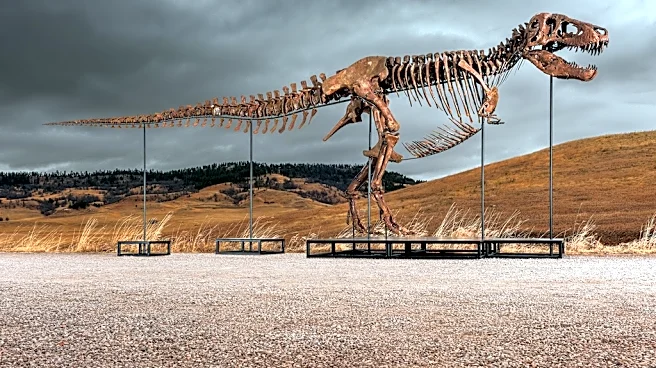
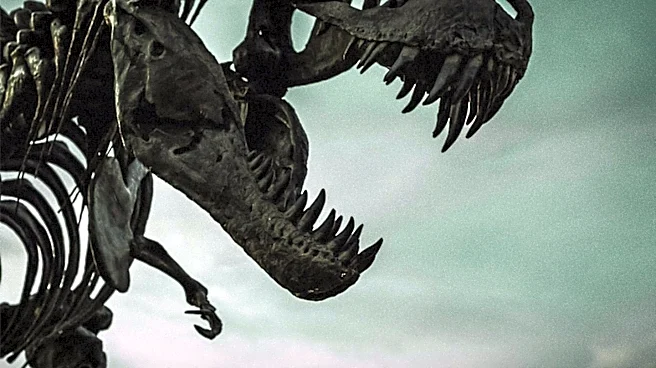
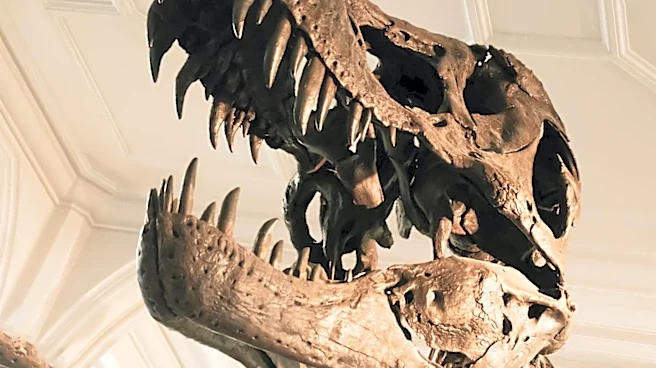
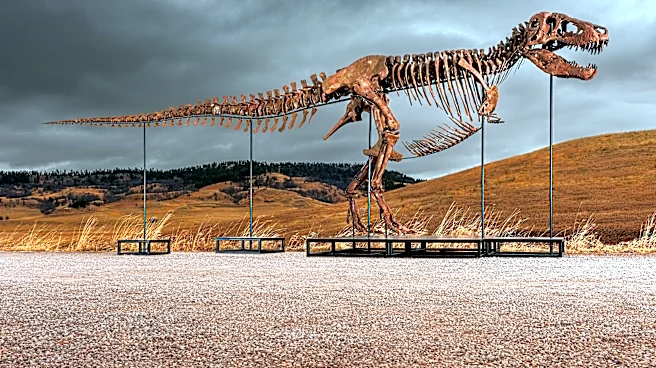
A Tyrannosaurus rex skeleton, nicknamed 'Gus', is set to be auctioned at Sotheby's in New York City. Discovered on a ranch in South Dakota, Gus is one of the largest and most complete T. rex fossils ever found, measuring 38 feet in length and 12.5 feet tall.
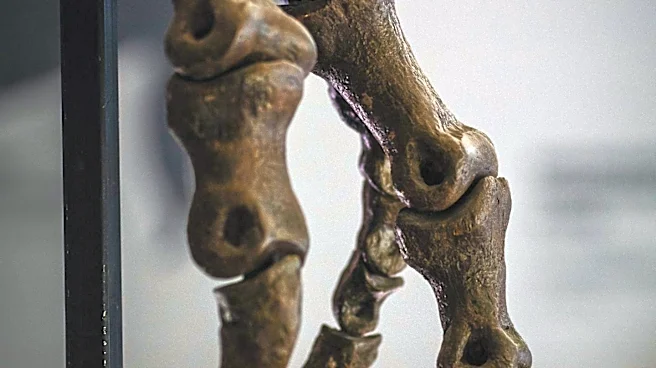
The fossil includes 183 bone elements, making it about 61% complete by bone count. The auction is expected to fetch between $20 to $30 million, potentially setting a new record for fossil sales. However, the sale has sparked controversy within the scientific community, as the fossil's private ownership could limit scientific study and public access.
Why It's Important?
The auction of Gus highlights a growing tension between private ownership and scientific research. Fossils like Gus are invaluable to paleontology, offering insights into the prehistoric world. However, when such specimens are sold to private collectors, they often become inaccessible to researchers, hindering scientific progress. This situation underscores a broader issue in paleontology, where the commercialization of fossils can lead to significant scientific losses. The sale of Gus could set a precedent, encouraging more private acquisitions and further restricting scientific access to important paleontological finds.
What's Next?
If Gus is sold to a private collector, it may never be available for scientific study or public display. This could prompt calls for regulatory changes to ensure that significant fossils remain accessible to researchers. The scientific community may advocate for policies that prioritize public ownership of important fossils, ensuring they are preserved in museums or research institutions. Additionally, the sale could reignite debates about the ethics of fossil auctions and the responsibilities of private collectors in preserving scientific heritage.
Beyond the Headlines
The sale of Gus raises ethical questions about the stewardship of natural history. Fossils are non-renewable resources that provide unique insights into Earth's past. Their privatization can lead to a loss of scientific knowledge and public education opportunities. This situation highlights the need for a balance between private interests and public good, ensuring that significant fossils are preserved for future generations. The debate also touches on broader issues of cultural heritage and the role of private collectors in preserving or restricting access to important historical artifacts.