



What's Happening?
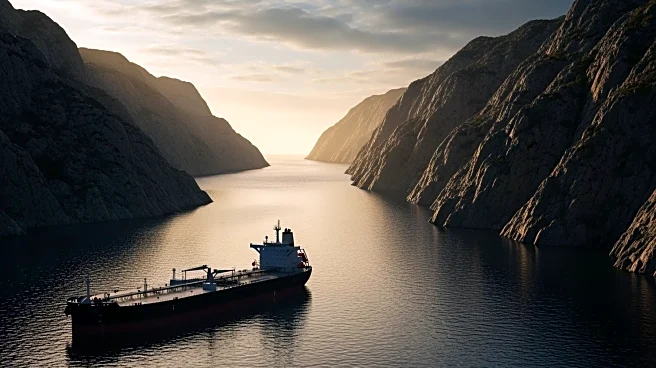
The Strait of Hormuz, a critical maritime passage for global energy transport, is experiencing significant disruptions due to geopolitical tensions involving Iran, the United States, and Israel. This narrow passage typically facilitates the flow of approximately
21 million barrels of oil per day, accounting for about 20% of global consumption. Recent developments have led to a 'soft closure' of the strait, where ships can still pass but often at a high cost, effectively acting as unofficial transit fees. This situation has caused many shipping companies to avoid the passage, leading to a significant disruption in the global flow of energy. In response, Gulf states like Saudi Arabia and the United Arab Emirates are utilizing alternative routes and infrastructure to maintain oil exports, but these efforts are insufficient to fully compensate for the reduced capacity of the Strait of Hormuz.
Why It's Important?
The disruptions in the Strait of Hormuz have immediate and far-reaching implications for the global energy market. The reduction in oil and liquefied natural gas (LNG) exports has led to a sharp increase in energy prices, affecting key markets in Europe and Asia. This price surge is contributing to inflationary pressures, industry damage, and financial instability worldwide. The situation underscores the vulnerability of the global economy to geopolitical tensions and highlights the need for diversified energy sources and routes. The crisis also poses a strategic challenge, as it may necessitate increased international military presence in the Gulf to ensure freedom of navigation and counter Iranian influence.
What's Next?
In the short term, the global community may see increased military and diplomatic efforts to stabilize the situation in the Strait of Hormuz. This could involve naval escorts and enhanced maritime policing to secure the passage. In the long term, the crisis is likely to accelerate trends towards energy diversification, including investments in overland pipelines and renewable energy sources. These adaptations aim to reduce global dependence on the Strait of Hormuz, potentially diminishing Iran's leverage in the region. The situation presents an opportunity for systemic changes in the global energy infrastructure, promoting resilience against future geopolitical disruptions.
Beyond the Headlines
The current crisis in the Strait of Hormuz serves as a reminder of the global economy's structural vulnerabilities. It highlights the risks associated with over-reliance on a single geographic chokepoint for energy transport. The situation also reflects broader geopolitical dynamics, where energy resources are used as tools of influence and pressure. As the world moves towards a more diversified and resilient energy system, the strategic importance of the Strait of Hormuz may diminish, altering the geopolitical landscape in the Middle East and beyond.