





What's Happening?
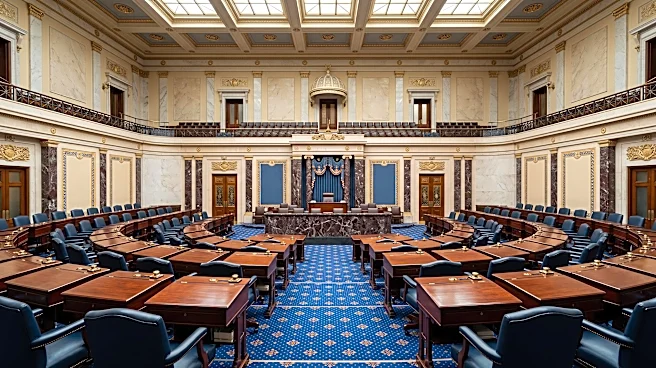
Senator Chuck Grassley (R-Iowa), Chairman of the Senate Judiciary Committee, has dismissed requests from fellow Republican senators to subpoena President Trump's son, Donald Trump Jr. The calls for a subpoena originated from Senator John Curtis (R-Utah)
and were supported by Senator John Cornyn (R-Texas), a senior Republican on the committee. Senator Grassley, in a statement from the committee dais, framed the request as coming from Senator Dick Durbin (D-Ill.), the committee’s top Democrat, and criticized what he perceived as selective investigations based on political affiliation. He argued that his Democratic colleagues ignore allegations against the Biden family while pursuing investigations into the Trump family. Senator Grassley declined to answer further questions after the hearing, referring to his previous statements.
Why It's Important?
This decision by Senator Grassley highlights internal divisions within the Republican party regarding oversight and investigations, particularly concerning the families of political figures. By rejecting the subpoena request from his own party members, Senator Grassley is asserting his authority as committee chair and potentially signaling a reluctance to engage in investigations that could be perceived as politically motivated or retaliatory. This stance could influence future congressional oversight efforts, setting a precedent for how such requests are handled, especially when they involve high-profile individuals or are seen as partisan. The situation also underscores the ongoing debate about the impartiality of congressional investigations and the consistent application of oversight standards across different administrations.
What's Next?
Following Senator Grassley's decision, Senator Curtis has indicated his acceptance, acknowledging Grassley's prerogative as the committee chair. This suggests that the immediate push for a subpoena against President Trump's son by these Republican senators may not proceed further within the Judiciary Committee. However, the broader issue of congressional oversight into potential conflicts of interest involving presidential families is likely to remain a point of contention. Future actions could include other avenues for investigation or renewed calls for transparency, potentially from different committees or through alternative legislative means. The political discourse surrounding the perceived double standards in investigations between Republican and Democratic administrations is also expected to continue.
Beyond the Headlines
The refusal to subpoena President Trump's son, despite calls from within his own party, raises questions about the balance of power within congressional committees and the influence of party leadership on investigative priorities. It also touches upon the ethical considerations of applying consistent oversight standards, regardless of political affiliation. The argument made by Senator Curtis, that 'the country should not have to accept one standard for the family of a Republican president and another for the family of a Democratic president,' points to a deeper concern about the erosion of trust in governmental institutions and the perception of partisan justice. This event could contribute to a broader discussion about the need for independent and non-partisan mechanisms for investigating potential conflicts of interest at the highest levels of government.