







What's Happening?
Sierra Nevada Corporation (SNC) has announced its withdrawal from the U.S. Navy’s Undergraduate Jet Training System (UJTS) competition, just days before the bid deadline. This decision leaves the Textron Aviation Defense/Leonardo team as the sole remaining
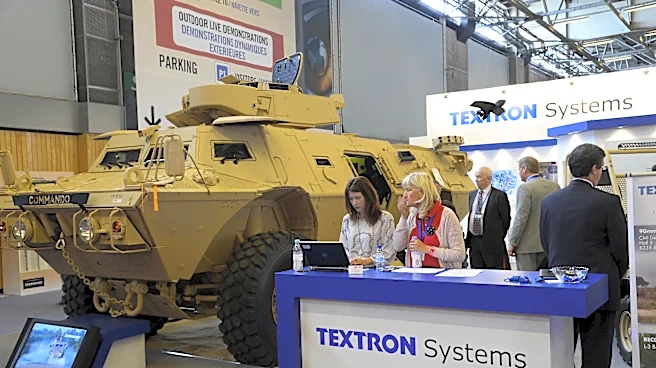
competitor for the contract to replace the T-45 Goshawk trainer aircraft. SNC stated it "could not responsibly bid the UJTS program under the current contract structure," though it remains open to re-engaging if the approach is revised. Previously, Lockheed Martin and Boeing also withdrew from the competition, citing various reasons including an inability to meet Navy requirements or concerns about the contract structure. The U.S. Navy is now expected to award the UJTS procurement contract in the fourth quarter of Fiscal Year 2027, a revised timeline from earlier projections. Textron Aviation Defense is offering its Beechcraft M-346N, an aircraft already in service globally and proposed as a 'ready-now' solution.
Why It's Important?
SNC's withdrawal significantly impacts the U.S. Navy's UJTS program by eliminating competition and potentially streamlining the selection process. While Textron Aviation Defense's M-346N is a proven platform, the lack of competitive bids could raise questions about cost-effectiveness and the Navy's ability to secure the most advantageous terms. The UJTS program is critical for training future naval aviators, and the replacement of the aging T-45 Goshawk is a high priority due to ongoing maintenance issues. The Navy's decision to shift away from requiring full Field Carrier Landing Practice (FCLP) to touchdown for the new trainer, instead relying more on virtual training and later-stage FRS training, has been a point of contention. This change, while potentially accelerating the fielding of new aircraft, could alter the foundational training experience for naval aviators and impact their readiness for carrier operations.
What's Next?
With Textron Aviation Defense/Leonardo as the sole bidder, the U.S. Navy will proceed with evaluating their Beechcraft M-346N offering. The contract award is anticipated in the fourth quarter of Fiscal Year 2027. The M-346N, if selected, will be assembled in Wichita, Kansas, and adapted with specific features for naval aviation training, including a Live Virtual and Constructive (LVC) system. The Navy's revised training approach, emphasizing virtual training and FCLP to wave-off, will continue to be implemented. This shift means future student pilots will rely more on simulators and perform complete FCLPs only in Field Replacement Squadrons, which could lead to further discussions regarding the optimal balance between simulated and real-world training for carrier-based operations. The successful integration of the new trainer and its associated ground-based training system will be crucial for the future of naval aviation.
Beyond the Headlines
The UJTS program's evolution, particularly the reduced emphasis on physical carrier landing practice in initial training, reflects a broader trend in military aviation towards leveraging advanced simulation and virtual reality technologies. While this approach offers potential cost savings and accelerated training timelines, it also raises questions about the development of critical tactile skills and decision-making under real-world stress. The debate over the extent to which virtual training can fully replicate the complexities and demands of carrier landings is ongoing. Furthermore, the repeated withdrawals of major defense contractors from this competition, citing contract structure issues, could signal underlying challenges in how the U.S. military procures complex systems. This could lead to future adjustments in contracting strategies to ensure robust competition and innovation in defense acquisitions.