

What's Happening?
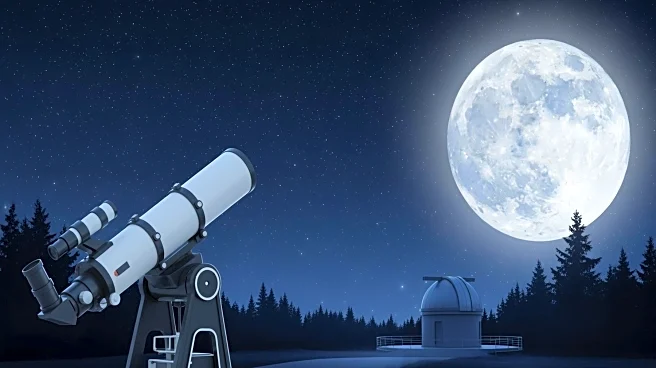
On December 28, 2025, the night sky is set to feature a waxing gibbous moon at 65% illumination, with Jupiter prominently visible near the constellation Gemini. The Quadrantid meteor shower begins its annual activity, expected to peak around January 3-4,
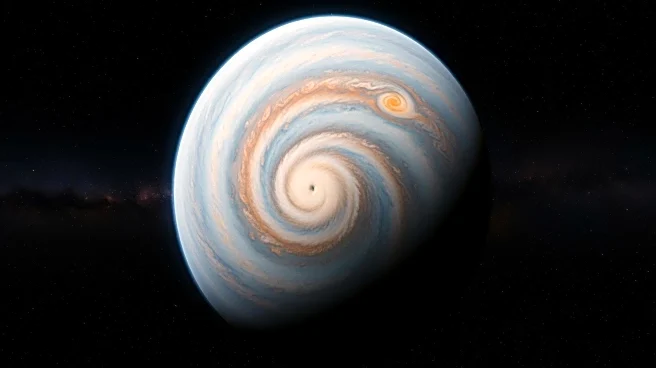
2026. This meteor shower is best observed from the Northern Hemisphere, as its radiant is located in the region of Boötes. However, the bright moonlight may hinder visibility of the fainter meteors. Additionally, a small near-Earth asteroid, 2025 YW4, will safely pass by Earth at a distance of about 683,000 miles. Observers are also advised to look for Jupiter, which will be at opposition in January 2026, making it highly visible throughout the night.
Why It's Important?
The Quadrantid meteor shower is one of the major annual meteor showers, providing a spectacle for skywatchers. However, the bright moonlight this year poses a challenge for observing the full extent of the shower. The presence of Jupiter, a major planet in the solar system, adds to the celestial interest, especially as it approaches opposition, a time when it is closest to Earth and most visible. The safe passage of asteroid 2025 YW4 highlights ongoing efforts in space monitoring and the importance of tracking near-Earth objects for planetary defense.
What's Next?
As the Quadrantid meteor shower progresses, skywatchers will continue to monitor the skies, particularly around its peak in early January. The bright moon will remain a factor, but enthusiasts can still enjoy the brighter meteors. Jupiter's opposition in January will provide an excellent opportunity for both amateur and professional astronomers to observe the planet in detail. The continued tracking of near-Earth objects like asteroid 2025 YW4 will remain a priority for space agencies to ensure planetary safety.