





What's Happening?
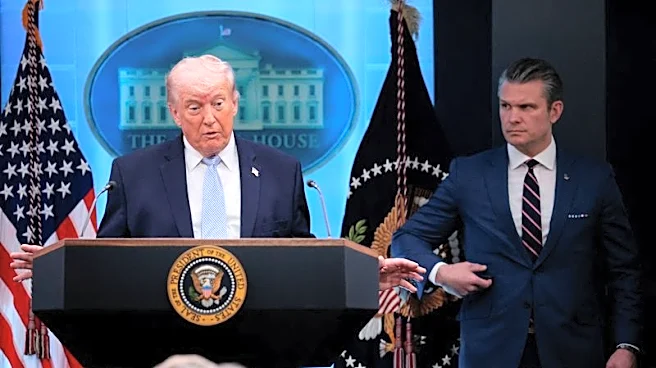
European stock markets have surged following a two-week ceasefire agreement between the United States and Iran. President Trump has agreed to the ceasefire, contingent upon Iran unblocking the Strait of Hormuz, a critical passage for global oil shipments.
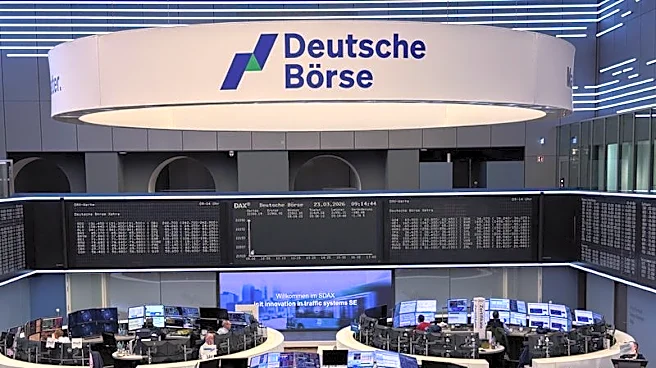
This development has led to significant gains in European markets, particularly in the construction, materials, and financial services sectors. However, oil and gas stocks have experienced a decline due to the anticipated easing of tensions in the region. The ceasefire is seen as a temporary de-escalation in the ongoing geopolitical tensions that have affected global markets.
Why It's Important?
The ceasefire agreement is crucial as it temporarily alleviates geopolitical tensions that have been a source of volatility in global markets. The Strait of Hormuz is a vital chokepoint for oil transportation, and any disruption can significantly impact global oil prices and supply chains. The agreement provides a window of stability, allowing markets to recover and investors to reassess their strategies. However, the temporary nature of the ceasefire means that underlying tensions remain, and any breakdown in negotiations could quickly reverse market gains. Stakeholders in the energy sector and international trade are particularly attentive to developments in this region.
What's Next?
The next steps involve monitoring the implementation of the ceasefire and any further diplomatic engagements between the U.S. and Iran. The situation remains fluid, and any changes could have immediate repercussions on global markets. Investors and policymakers will be watching for signs of a more permanent resolution or potential escalation. The response from other geopolitical players, such as the European Union and Middle Eastern countries, will also be critical in shaping the future landscape of international relations and economic stability.