





What's Happening?
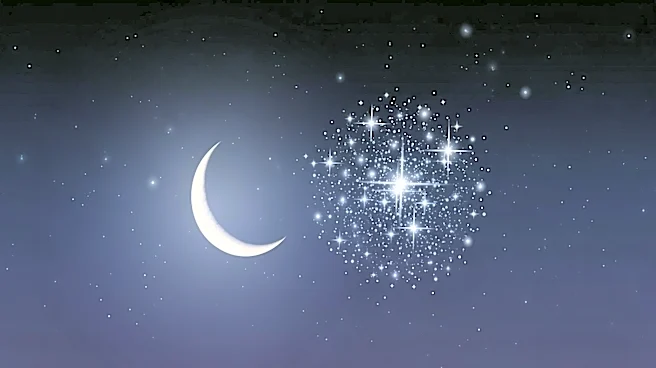
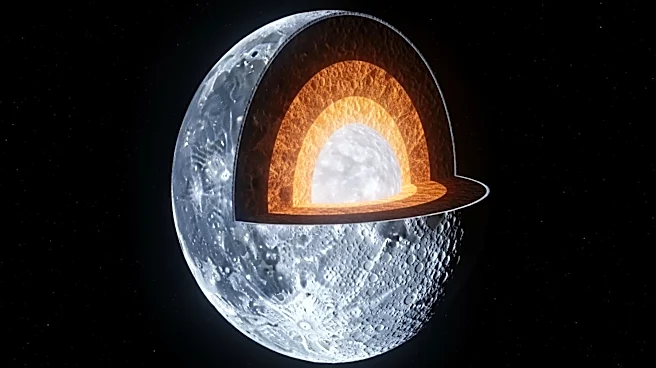
The Hollow Moon theory, which suggests that the Moon is an artificial, hollow structure, has been debunked by scientific evidence. Originating from fiction and conspiracy theories, this idea has persisted despite being contradicted by data from seismology,
orbital dynamics, and isotopic analysis. The theory gained traction in the 1970s when Soviet writers proposed it in a magazine, suggesting the Moon was a hollowed-out asteroid piloted by aliens. However, scientific investigations, including seismometer readings from the Apollo missions and data from NASA's GRAIL mission, have consistently shown that the Moon is a solid body with a dense core, formed from the debris of a massive impact with Earth billions of years ago.
Why It's Important?
Debunking the Hollow Moon theory is crucial for maintaining scientific integrity and public understanding of space science. The persistence of such conspiracy theories can undermine trust in scientific research and distract from legitimate scientific inquiries. By providing clear evidence against the Hollow Moon theory, scientists reinforce the importance of evidence-based conclusions and the scientific method. This also highlights the need for effective science communication to counter misinformation and educate the public about the true nature of celestial bodies, which is essential as humanity prepares for future lunar exploration and potential colonization.