


What's Happening?
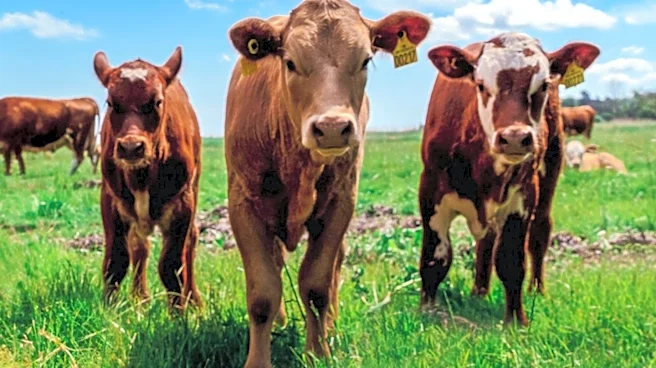
Wyoming ranchers have reported that their cattle have largely survived a recent heat wave, thanks to the state's lower humidity and cooler nights. In contrast, South Dakota experienced significant cattle losses, with up to 2,000 head dying due to extreme
heat and humidity. Wyoming's drier climate and the practice of grazing cattle on open ranges have been credited with mitigating the impact of the heat. Ranchers remain vigilant, as heat stress is still a concern, particularly for black-hided cattle that absorb more solar heat.
Why It's Important?
The survival of Wyoming's cattle during the heat wave highlights the importance of climate and environmental conditions in livestock management. The losses in South Dakota underscore the vulnerability of the cattle industry to extreme weather, which can have severe economic impacts. With the U.S. cattle herd at a 75-year low, any significant loss exacerbates supply issues and affects beef prices. The situation emphasizes the need for adaptive strategies in agriculture to cope with climate variability.
Beyond the Headlines
The contrasting outcomes between Wyoming and South Dakota may prompt discussions on best practices for livestock management in extreme weather. The economic implications extend beyond immediate losses, affecting feedlot operations, meat processing, and consumer markets. Additionally, the event may influence policy discussions on agricultural support and climate adaptation strategies, as producers seek to mitigate risks associated with climate change.