







What's Happening?
Following a 10-day congressional delegation trip to five European countries, including Ukraine, Representative Raja Krishnamoorthi (D-Ill.) is urging the U.S. to learn from Ukraine's battlefield strategies, particularly the widespread use of drones. During
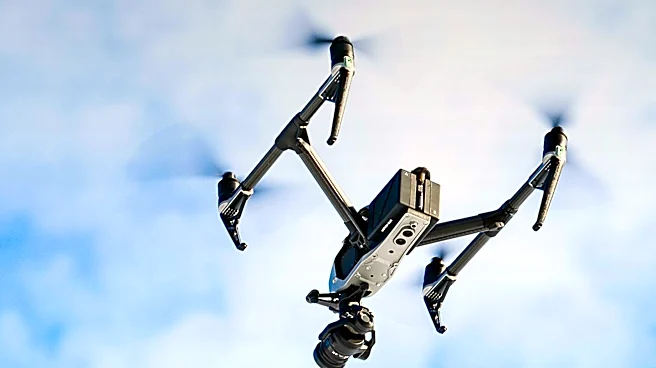
his visit to Kyiv, Krishnamoorthi toured a Ukrainian drone-defense production site, which inspired him to propose the LESSONS from Ukraine Act. This bill would mandate the Pentagon to study Ukraine's adaptation to drone warfare, encompassing their use in combat, intelligence, and logistics. The proposed legislation also seeks an assessment of how drones are altering the survivability of armored vehicles and battlefield medicine, and calls for a plan to integrate these lessons into U.S. military training. Krishnamoorthi emphasized the need for increased drone usage for both reconnaissance and attack purposes, and for the U.S. to develop more resilient, faster, and cheaper weapons, while also focusing on deterrence.
Why It's Important?
The push by Representative Krishnamoorthi to integrate Ukrainian drone tactics into U.S. defense strategies highlights a significant shift in modern warfare and its implications for national security. Adopting these lessons could lead to a re-evaluation of traditional military doctrines, potentially reducing reliance on conventional, more vulnerable assets like tanks and armored vehicles. This initiative could spur innovation and investment in drone technology and counter-drone systems within the U.S. defense industry, creating new opportunities for tech companies and defense contractors. Furthermore, it underscores a proactive approach to military readiness, aiming to prevent future conflicts by enhancing deterrence capabilities. The focus on co-development of defense systems with allies, as suggested by Krishnamoorthi regarding PAC-3 interceptors, could also strengthen international partnerships and collective security, particularly in regions facing ongoing threats.
What's Next?
The proposed LESSONS from Ukraine Act will likely undergo legislative review in Congress. If passed, the Pentagon would be required to conduct comprehensive studies on Ukraine's drone usage and its impact on modern warfare. This could lead to significant policy changes within the Department of Defense, including increased funding for drone research and development, adjustments to military training programs, and potential shifts in procurement priorities. Stakeholders such as defense contractors, technology firms specializing in unmanned systems, and military strategists will closely monitor these developments. Additionally, the emphasis on co-development of defense systems with allied nations could lead to new international collaborations and defense agreements, particularly with European partners. The ongoing conflict in Ukraine will continue to serve as a real-world laboratory, providing further insights that could influence future U.S. defense policies.
Beyond the Headlines
Beyond the immediate military implications, Representative Krishnamoorthi's initiative touches upon broader ethical and strategic considerations regarding the future of warfare. The increasing reliance on unmanned systems raises questions about the nature of combat, the potential for reduced human involvement, and the ethical frameworks governing autonomous weapons. The shift away from traditional armored vehicles towards drone-centric strategies could also have long-term economic impacts, potentially reallocating defense budgets and influencing the global arms market. Culturally, it signifies a recognition that smaller, more agile forces, equipped with advanced technology, can effectively challenge larger, more conventional militaries. This adaptation reflects a dynamic geopolitical landscape where technological superiority and innovative tactics are becoming increasingly crucial for national defense and international stability.