
What's Happening?
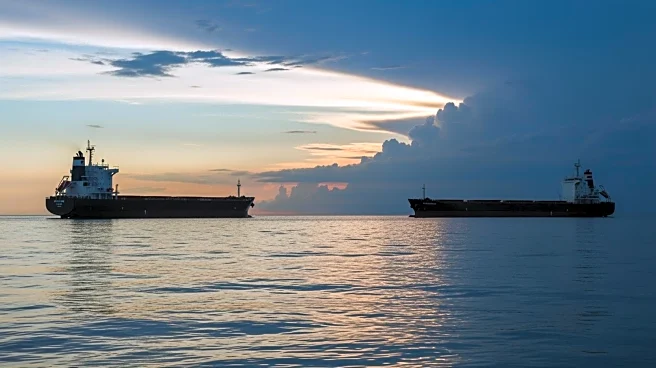
The United States has seized a second vessel in international waters near Venezuela, as part of an ongoing enforcement campaign against sanctioned oil tankers. This action follows President Trump's recent
call for a 'total and complete blockade' on such vessels entering or leaving Venezuela. The operation, led by the U.S. Coast Guard with support from the Department of War, involved helicopters surrounding the vessel and a tactical team conducting a right-of-visit boarding. The seized vessel was reportedly transporting Venezuelan oil, and the Venezuelan government has condemned the action as 'theft and kidnapping.' This seizure is part of a broader U.S. military build-up in Latin America, aimed at curbing the illicit movement of oil that allegedly funds narco-terrorism in the region.
Why It's Important?
This development is significant as it underscores the escalating tensions between the United States and Venezuela, particularly under the leadership of President Trump and Venezuelan President Nicolas Maduro. The U.S. actions are part of a larger strategy to exert pressure on the Maduro government, which the U.S. accuses of using oil revenues to support illicit activities. The seizures could further strain diplomatic relations and impact global oil markets, as Venezuela is a major oil producer. The U.S. aims to disrupt financial networks that allegedly support terrorism, but these actions also risk provoking international backlash and complicating relations with other countries that may view the blockade as a violation of international law.
What's Next?
Venezuela has vowed to take action against the U.S. seizures, including filing complaints with the United Nations Security Council and other international bodies. The situation may lead to increased diplomatic efforts by Venezuela to rally support from other nations. The U.S. is likely to continue its enforcement campaign, potentially leading to further seizures and heightened military presence in the region. The international community will be closely watching the developments, as they could have broader implications for global trade and diplomatic relations.