








What's Happening?
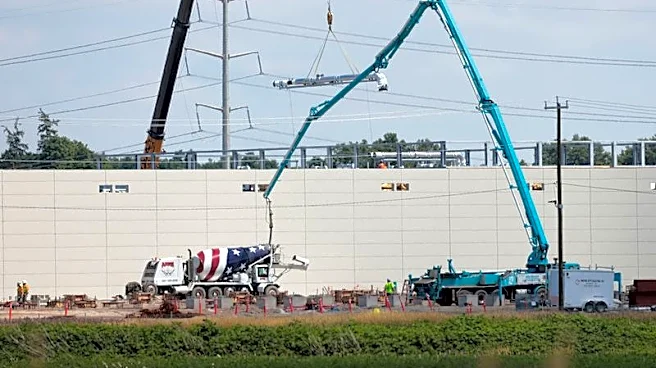
Democratic politicians in swing states like Michigan and Wisconsin are facing backlash from their voter base due to their support for the construction of large datacenters. These projects, such as the $16 billion datacenter by OpenAI and Oracle in Saline
Township, Michigan, have been criticized for their environmental impact and use of local resources. Michigan Governor Gretchen Whitmer's support for these projects has drawn ire from constituents, including Michigan congresswoman Rashida Tlaib, who labeled the governor's stance as 'disgusting.' Similarly, in Wisconsin, Governor Tony Evers has faced criticism for welcoming Microsoft's datacenter complex in Racine County. Despite the potential economic benefits, many Democratic voters oppose these projects, citing concerns over environmental degradation and resource consumption.
Why It's Important?
The controversy surrounding datacenters highlights a significant rift between Democratic leaders and their voter base in key battleground states. As these projects are often seen as environmentally harmful and resource-intensive, they pose a challenge to the Democratic Party's image as a champion of environmental issues. The backlash could impact upcoming elections, as voters may feel alienated by their leaders' decisions. This situation underscores the delicate balance politicians must maintain between economic development and environmental stewardship, especially in regions where voter sentiment is crucial for electoral success.
What's Next?
The ongoing opposition to datacenters may lead to increased political pressure on Democratic leaders to reconsider their support for such projects. In New York, a moratorium on new datacenters has already been enacted, setting a precedent that other states might follow. As the 2028 presidential election approaches, Democratic leaders in swing states may need to address voter concerns more directly to maintain their political standing. Additionally, candidates like Abdul El-Sayed, who advocate for part-public ownership of datacenters, may gain traction among voters seeking alternatives to the current approach.