



What's Happening?
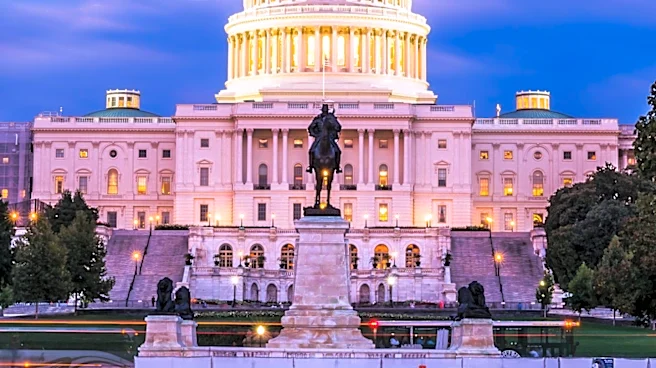
More than a dozen U.S. Catholic bishops met with members of Congress on September 16 to advocate for effective safety guardrails on artificial intelligence (AI) and the passage of the Kids Online Safety Act. These meetings coincided with the U.S. Conference
of Catholic Bishops (USCCB) announcing a new task force dedicated to engaging with tech leaders and lawmakers on concerns regarding AI, human dignity, and online child safety. Archbishop Alexander K. Sample of Portland, Oregon, chair of the USCCB’s religious liberty committee, emphasized the urgency of establishing AI guardrails within the next 12-18 months due to rapid technological advancements. While some Republicans in Congress support President Trump's stance on self-regulation for AI, Democrats are generally calling for more stringent AI regulations.
Why It's Important?
This initiative by the U.S. Catholic bishops signifies a growing concern among religious and ethical leaders regarding the societal implications of rapidly advancing technology. Their advocacy for AI guardrails and online child protection highlights a moral imperative to ensure that technological progress aligns with human dignity and well-being. The push for the Kids Online Safety Act, particularly its 'duty of care' provision, aims to hold developers accountable for protecting children online, addressing a critical vulnerability in the digital age. This engagement brings a significant moral voice to the legislative debate, potentially influencing policy decisions by emphasizing ethical considerations alongside economic and technological advancements. The differing views between political parties on AI regulation underscore the complexity of balancing innovation with safety and ethical oversight.
What's Next?
The USCCB's newly formed task force will continue to engage with tech leaders and lawmakers, aiming to shape future legislation and policies related to AI and online safety. The bishops will likely continue to press for the passage of the Kids Online Safety Act, particularly the Senate's version with its 'duty of care' provision, before lawmakers leave for the November elections. Given the differing opinions in Congress, achieving bipartisan consensus on AI regulation and online child protection will be a key challenge. The bishops' ongoing advocacy could lead to increased public awareness and pressure on legislators to prioritize these issues, potentially influencing the development of comprehensive regulatory frameworks that address the ethical and safety concerns surrounding emerging technologies.
Beyond the Headlines
The involvement of the U.S. Catholic bishops in the debate over AI and online safety reflects a broader societal reckoning with the ethical dimensions of technological progress. Beyond immediate legislative outcomes, this engagement highlights the role of religious institutions in providing a moral compass for complex contemporary issues. The call for 'human dignity' in AI development and 'duty of care' for children online points to fundamental questions about the kind of society technology is creating and the values it should uphold. This initiative could foster a more interdisciplinary approach to tech governance, integrating ethical, philosophical, and religious perspectives alongside technical and economic considerations. It also underscores the growing recognition that technological advancements are not merely technical challenges but profound human and moral ones.