




What's Happening?
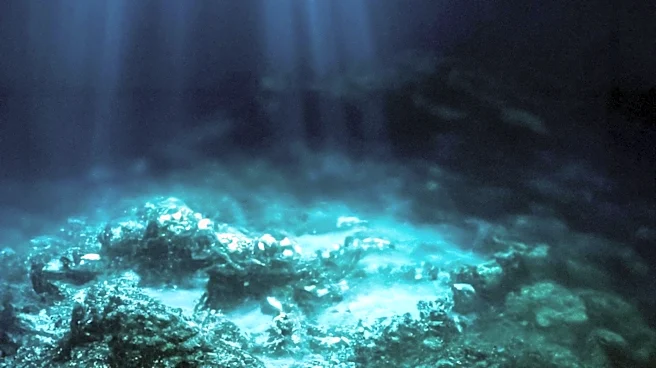
A recent study estimates that even with 1,000 deep-sea vehicles, it would take over 100,000 years to visually survey the entire deep seafloor. Currently, humans have directly observed less than 0.001% of the deep seabed. The study, led by Katherine Croff
Bell of Ocean Discovery League, highlights the immense challenge of exploring the deep ocean, which covers two-thirds of Earth's surface. Despite technological advancements, the vastness and inaccessibility of the deep sea make comprehensive exploration a daunting task. The study emphasizes the need for strategic sampling and international collaboration to enhance our understanding of this largely unexplored frontier.
Why It's Important?
The limited exploration of the deep sea has significant implications for science, conservation, and resource management. The deep ocean is home to diverse ecosystems and potential resources, but its inaccessibility hinders our ability to study and protect these environments. Understanding the deep sea is crucial for assessing the impacts of climate change, pollution, and human activities on marine ecosystems. The study calls for innovative approaches and international cooperation to improve exploration efforts and ensure the sustainable use of ocean resources. As interest in deep-sea mining and conservation grows, comprehensive knowledge of the deep ocean will be essential for informed decision-making.