







What's Happening?
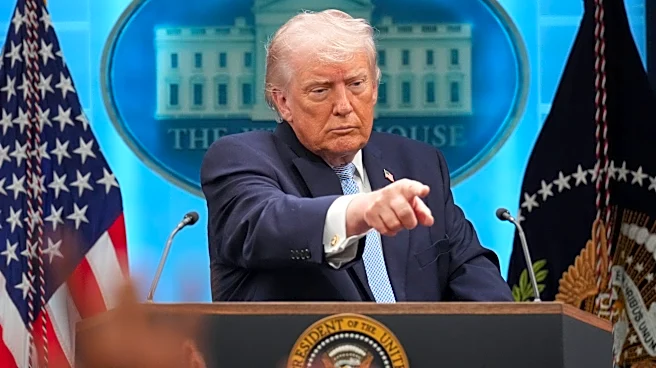
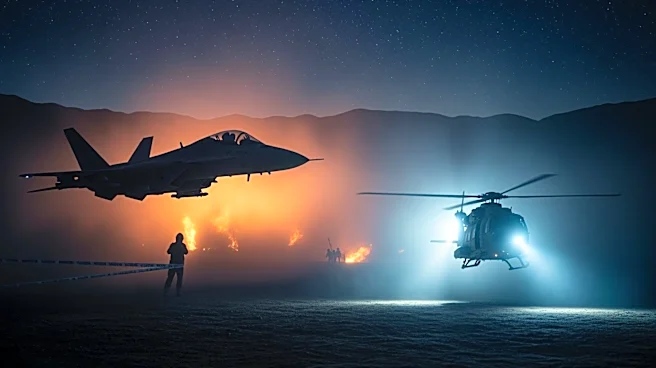
President Trump has announced a last-minute ceasefire agreement between the U.S. and Iran, temporarily halting hostilities. The agreement includes a two-week cessation of U.S. attacks, contingent upon Iran reopening the Strait of Hormuz. This development
comes amid heightened tensions and military confrontations in the region, which have threatened global oil supplies and increased geopolitical instability. The ceasefire aims to de-escalate the situation and provide a window for diplomatic negotiations to address underlying issues.
Why It's Important?
The ceasefire agreement is a critical step in preventing further escalation of conflict in the Middle East, which could have severe consequences for global security and economic stability. The reopening of the Strait of Hormuz is essential for maintaining the flow of oil, a vital resource for the global economy. The agreement also highlights the importance of diplomatic engagement in resolving international disputes and the potential for peaceful solutions to complex geopolitical challenges. The outcome of this ceasefire could influence future U.S.-Iran relations and impact regional dynamics.
What's Next?
During the ceasefire period, diplomatic efforts will likely intensify to reach a more permanent resolution to the conflict. Both the U.S. and Iran may engage in negotiations to address broader issues, such as nuclear proliferation and regional security. The international community will be closely monitoring the situation, as the outcome could set a precedent for conflict resolution in the region. The success of the ceasefire could pave the way for improved relations and cooperation between the U.S. and Iran, while failure could lead to renewed hostilities and further instability.