



What's Happening?
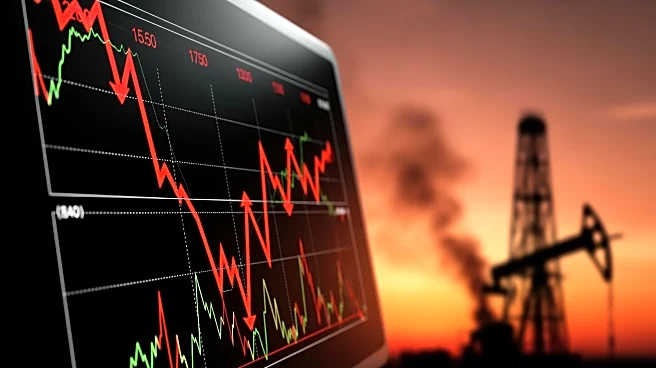
Japan's Nikkei 225 index experienced a significant decline, dropping more than 6% as oil prices surged past $100 a barrel. This increase in oil prices is attributed to disruptions caused by the ongoing conflict in the Middle East. The situation is further
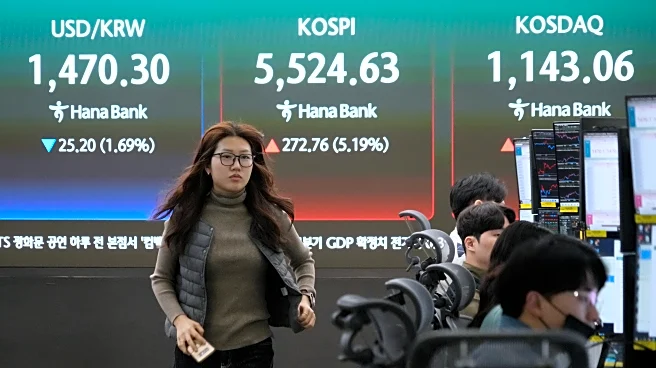
exacerbated by a weakening yen, which raises the risk of stagflation in Japan. In response, the Japanese government is considering increased fiscal spending, which complicates the central bank's efforts to normalize policy settings. The global impact of these developments is evident as other major stock markets, including Australia's ASX 200 and South Korea's Kospi, also faced substantial losses.
Why It's Important?
The sharp decline in Japan's Nikkei 225 index highlights the vulnerability of global markets to geopolitical tensions, particularly in the energy sector. The surge in oil prices not only affects Japan but also has broader implications for the global economy, potentially leading to increased inflationary pressures. For Japan, the risk of stagflation—a combination of stagnant economic growth and rising inflation—poses a significant challenge. This situation may force the Japanese government to implement fiscal measures that could further strain the country's economic recovery efforts. Additionally, the impact on global stock markets underscores the interconnectedness of economies and the potential for widespread financial instability.
What's Next?
As the situation in the Middle East continues to unfold, the Japanese government and central bank will need to carefully navigate the economic challenges posed by rising oil prices and a weakening yen. Potential measures could include coordinated efforts with international partners to stabilize oil prices and mitigate the impact on the global economy. The response from other major economies, particularly those heavily reliant on energy imports, will also be crucial in determining the overall economic impact. Monitoring the developments in the Middle East and their effects on global energy markets will be essential for policymakers and investors alike.