



What's Happening?
Florida's agriculture industry has suffered significant losses due to unprecedented freeze events, with preliminary estimates indicating over $3 billion in damages. According to the Florida Department of Agriculture and Consumer Services, these freezes
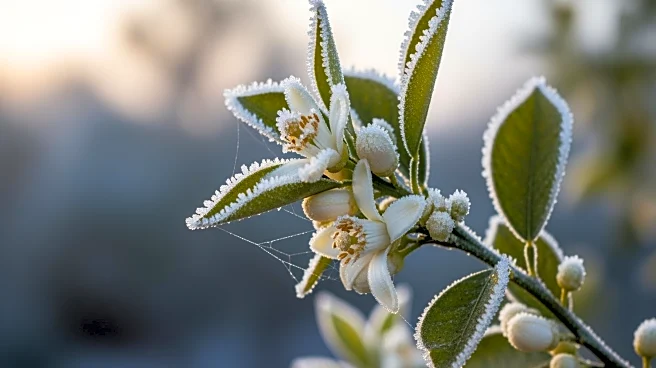
have been among the most damaging in the state's history. Commissioner Wilton Simpson highlighted the urgent need for support for farmers, ranchers, and growers who are crucial to the state's economy and food supply. The harsh winter conditions have affected a wide range of crops, including vegetables, melons, citrus, sugarcane, and horticulture, across 66 counties. The cold snap, which began in late December and continued into early February, brought record-low temperatures, severely impacting crops not adapted to such conditions.
Why It's Important?
The financial impact of the freeze on Florida's agriculture is profound, threatening the livelihoods of farmers and the state's economy, which heavily relies on agriculture. The losses could lead to increased prices for consumers and potential shortages of certain produce. The situation underscores the vulnerability of agricultural sectors to extreme weather events, which are becoming more frequent and severe. The need for federal support is critical to help farmers recover and replant, ensuring the stability of the food supply chain. The response from federal and state authorities will be crucial in mitigating the long-term economic impact and supporting the agricultural community.
What's Next?
In response to the crisis, Florida's agricultural leaders are seeking federal assistance to provide financial relief to affected farmers. Commissioner Simpson has expressed gratitude to President Trump and U.S. Secretary of Agriculture Brooke Rollins for their support and is working with producer groups and the congressional delegation to secure federal block grant funding. This funding will be essential for recovery efforts, including replanting and implementing measures to protect crops from future freeze events. The agricultural community will need to adapt to changing climate patterns, potentially altering planting schedules and investing in more resilient crop varieties.