
What's Happening?
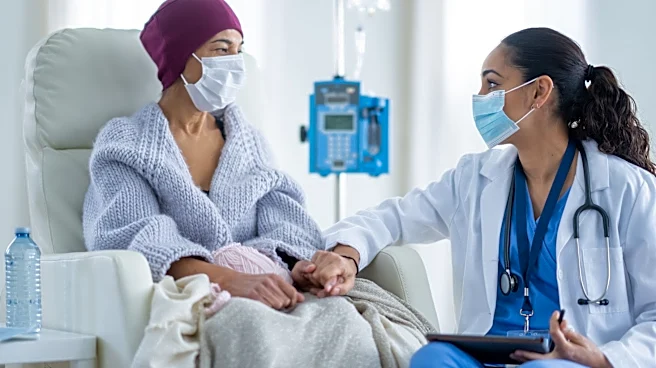
The 'five-year survival' statistic in cancer treatment is a benchmark used by doctors and researchers, but it does not equate to a 'five-year cure.' While over 10 million cancer survivors in the U.S. have
lived beyond five years, and more than 1.4 million beyond 20 years, the meaning of this milestone varies significantly depending on the type of cancer. For solid tumors like breast, colorectal, and prostate cancers, which have longer cellular doubling times, microscopic cells can hide and evade detection, making long-term behavior harder to predict. In contrast, cancers with short doubling times, such as testicular cancer, may be considered cured after a few years if no recurrence is detected. The National Cancer Institute (NCI) emphasizes that while five years is an important landmark, it does not guarantee a cure and patients may still face long-term effects or secondary cancers.
Why It's Important?
The nuanced understanding of the 'five-year survival' rate is crucial for cancer patients, healthcare providers, and public health initiatives in the U.S. Misinterpreting this statistic can lead to false hope or undue anxiety among survivors. For the healthcare system, it highlights the need for continued monitoring and support for patients beyond the initial treatment phase, addressing issues like anxiety, depression, and long-term side effects such as fatigue and 'chemobrain.' This understanding also influences research funding and policy decisions, emphasizing the importance of developing more precise prognostic tools and personalized treatment plans. For pharmaceutical and medical device industries, it underscores the ongoing demand for innovations that not only extend survival but also improve the quality of life for long-term survivors.
What's Next?
The medical community will continue to refine its communication around cancer survival statistics, educating patients and the public about the specific implications of different survival rates. Research will likely focus on developing more accurate predictive models for various cancer types and identifying biomarkers for early detection of recurrence. There will also be an increased emphasis on survivorship care, including programs to manage long-term physical and psychological side effects of cancer treatment. This holistic approach aims to improve the overall well-being of cancer survivors, ensuring they receive comprehensive support beyond the five-year mark. Public health campaigns may also work to demystify cancer statistics, promoting a more informed understanding of the disease's trajectory.
Beyond the Headlines
The concept of 'five-year survival' touches upon profound psychological and existential dimensions for individuals facing cancer. The arbitrary nature of the five-year mark, while medically useful, can create immense emotional pressure and a sense of living in limbo for survivors. The article highlights the 'high-end problem' of modern oncology: while treatments are increasingly effective at extending life, they also introduce new challenges related to long-term health and quality of life. This raises ethical considerations about the balance between aggressive treatment and patient well-being, and the need for compassionate care that addresses the full spectrum of a survivor's experience. The ongoing journey of cancer survivorship, with its uncertainties and potential for late effects, underscores the resilience of the human spirit and the continuous adaptation required to live with and beyond a life-altering diagnosis.