
What's Happening?
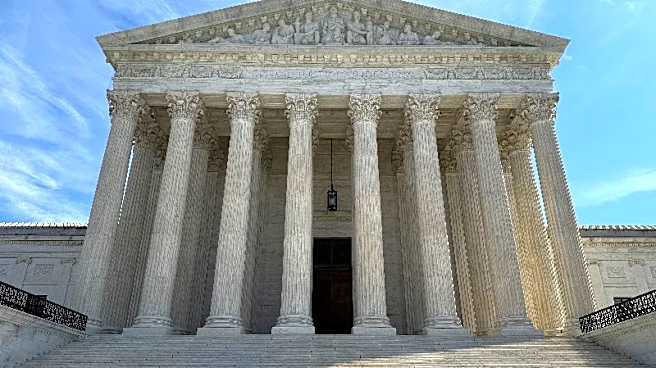
The U.S. Supreme Court has ruled in favor of Michigan, allowing the state's lawsuit to shut down a section of the aging Line 5 pipeline beneath a Great Lakes channel to remain in state court. Justice Sonia
Sotomayor, writing for a unanimous court, stated that Enbridge, the energy company operating the pipeline, delayed too long in attempting to move the case to federal court. The pipeline, which has been operational since 1953, transports crude oil and natural gas liquids between Wisconsin and Ontario. Concerns about potential environmental hazards have been mounting, particularly after a 2018 incident where a boat anchor damaged the pipeline. Michigan's Attorney General Dana Nessel initiated the lawsuit in 2019, seeking to void the easement that permits the pipeline's operation under the straits of Mackinac. Despite a restraining order in 2020, Enbridge continued operations after meeting safety requirements. The company is also pursuing permits to encase the pipeline in a protective tunnel, a move opposed by environmental groups.
Why It's Important?
This ruling is significant as it underscores the ongoing legal and environmental challenges surrounding the operation of aging energy infrastructure in the U.S. The decision to keep the case in state court could expedite Michigan's efforts to address environmental concerns associated with Line 5, which poses a risk of catastrophic spills in the Great Lakes. The outcome of this case could set a precedent for how similar disputes are handled, potentially influencing regulatory approaches to pipeline safety and environmental protection. Stakeholders such as environmental groups, local communities, and energy companies are closely watching the developments, as the case could impact regional energy supply and environmental policies.
What's Next?
Enbridge is appealing a separate federal court decision that mandates the shutdown of part of Line 5 running through a Native American reservation in Wisconsin. The company has begun rerouting efforts, which are also facing legal challenges. Meanwhile, Michigan's state supreme court is considering a lawsuit challenging the permits for the protective tunnel. The outcome of these legal battles will determine the future of Line 5 and could influence broader regulatory and environmental strategies in the region.