









What's Happening?
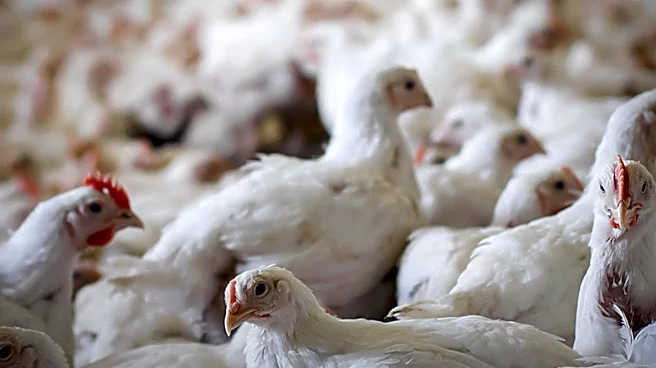
A bird flu outbreak in California has affected approximately 1.3 million laying hens, according to USDA data. This incident, confirmed on October 28, follows an earlier outbreak on October 19 that impacted 934,600 birds in Illinois. The timing of these
outbreaks is particularly critical as they occur just before the holiday baking rush, a period of high demand for eggs from bakeries, retailers, and food manufacturers. The seasonal migration of birds typically leads to an increase in such outbreak detections. The USDA's October Food Price Outlook had previously projected a 29.3% decrease in retail egg prices from 2025 to 2026, alongside a 1.2% increase in poultry prices. However, regional outbreaks can disrupt these broader trends, leading to localized shortages and price volatility.
Why It's Important?
This bird flu outbreak is significant due to its potential to disrupt the U.S. egg supply chain, particularly impacting the food manufacturing and retail sectors during a peak demand period. Rohit Tripathi, Vice President of Industry Strategy for Manufacturing at Relex, highlighted that even if sufficient eggs exist elsewhere in the country, regional sourcing complexities—including specific delivery, packaging, housing, size, and quality requirements—can lead to shortages for individual retailers or manufacturers. Eggs are crucial ingredients, providing texture and acting as binders and emulsifiers in a wide range of products from baked goods to sauces. Substituting eggs can necessitate costly recipe revisions, trial production runs, and quality checks, affecting product consistency and consumer expectations. While this outbreak primarily affects laying hens and not broiler chickens, continued disease activity across poultry operations could exert broader pressure on prices and availability within the wider food industry.
What's Next?
Producers facing shortages will need to redistribute available eggs, reassess commitments to customers, and adjust packing and transportation logistics. Restoring production at an affected farm is a lengthy process, potentially taking several months. Before restocking, farms must successfully contain the disease, thoroughly disinfect facilities, and secure regulatory approval. The availability of replacement birds and the ongoing risk of further outbreaks will also influence the recovery timeline. In the interim, producers may source eggs from other facilities or arrange alternative supplies to meet customer needs. Experts recommend planning for recovery scenarios that could span from six months to a year, or even longer if further disruptions occur. The use of AI-supported planning tools can help manufacturers evaluate alternative suppliers, production capacities, ingredient costs, and product mixes to maintain availability and minimize waste during such disruptions.
Beyond the Headlines
The recurring nature of bird flu outbreaks underscores the inherent vulnerabilities within large-scale agricultural systems and their susceptibility to environmental factors like seasonal bird migration. This situation highlights the growing interest in functional egg alternatives, including plant-based options, as a means to mitigate supply volatility. While these alternatives offer choices for consumers and manufacturers, they can alter a finished product's taste, shelf life, or cost, presenting a complex trade-off. The incident also brings to light the critical role of advanced supply chain planning and technology, such as AI, in managing and responding to agricultural crises. The ability to quickly adapt and reallocate resources in the face of unexpected events is becoming increasingly vital for maintaining food security and economic stability in the U.S. food sector.