



What's Happening?
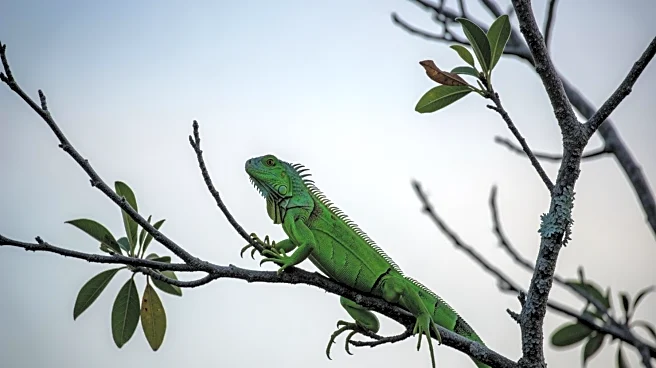
A significant cold snap in Florida over New Year's Eve led to an unusual phenomenon where iguanas, stunned by the cold, fell from trees. The cold-blooded reptiles, which rely on external heat to regulate their body temperature, became immobile as temperatures
dropped into the 40s and below. This caused them to lose muscle control and fall from their perches. The event was widely reported, with images of motionless iguanas circulating online. Wildlife officials have cautioned residents not to assume these iguanas are dead, as they often recover once temperatures rise. The cold front, one of the most widespread in years, brought temperatures in the 20s and 30s to North and Central Florida, and even South Florida experienced lows in the 40s, prompting frost advisories and cold-weather alerts.
Why It's Important?
The cold snap highlights the vulnerability of non-native species like the green iguana, which have become a significant part of Florida's ecosystem. These iguanas, introduced through the pet trade, are now considered invasive, causing damage to infrastructure and vegetation. The event underscores the challenges of managing invasive species, particularly in the face of extreme weather conditions. Additionally, the cold snap affected more than just wildlife; it prompted the opening of cold-weather shelters and advisories for residents to protect pets and plants. This situation illustrates the broader impacts of climate variability on both natural and human systems in Florida.
What's Next?
As temperatures return to normal, iguanas are expected to recover, but the event may reignite discussions on managing invasive species in Florida. Wildlife officials continue to advise against handling cold-stunned iguanas due to the potential for sudden and defensive reactions. The state may also review its strategies for dealing with such weather events, considering the implications for both wildlife and human communities. Ongoing monitoring of weather patterns and their effects on local ecosystems will be crucial in developing adaptive management strategies.