
What's Happening?
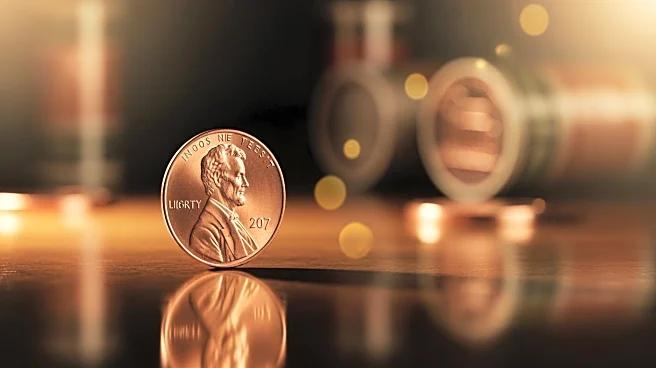
The U.S. Mint has officially stopped producing pennies as of November 12, 2025, following an order from President Trump earlier in the year. The decision was made due to the high cost of production, which
was nearly four times the coin's face value. This move has led to a surge in speculative buying, with individuals purchasing newly minted 2025 pennies at inflated prices, hoping they will become valuable collectibles. Online platforms like eBay have seen listings for boxes of these pennies priced at $1,000, despite their actual face value being only $25. However, experts warn that this is likely a speculative bubble, as the U.S. Mint produced approximately a billion pennies in 2025 alone, making them far from rare.
Why It's Important?
The cessation of penny production marks a significant shift in U.S. currency policy, reflecting broader economic considerations about cost efficiency and practicality. The speculative market that has emerged around these pennies highlights the potential for consumer exploitation in the face of perceived scarcity. This situation underscores the importance of public awareness and education regarding collectible markets, as many may be misled into investing in items that are unlikely to appreciate in value. The parallels drawn to past coin hoarding events, such as the 1976 bicentennial quarter craze, serve as a cautionary tale about the risks of speculative investments based on perceived rarity.
What's Next?
As the market for 2025 pennies continues to develop, it is likely that more individuals will attempt to capitalize on the perceived collectible value of these coins. However, as awareness grows about the actual production numbers and the lack of genuine scarcity, the speculative bubble may burst, leading to a correction in prices. Collectors and investors will need to exercise caution and conduct thorough research before making purchases. Additionally, the U.S. government may need to address public misconceptions and provide guidance to prevent consumer exploitation.
Beyond the Headlines
The decision to stop penny production also raises questions about the future of other low-denomination coins and the broader implications for cash transactions in an increasingly digital economy. As society moves towards cashless transactions, the relevance of physical currency continues to diminish, prompting discussions about the future of coinage and its role in modern commerce. This development may also influence other countries to reevaluate their own currency production practices in light of economic and technological advancements.