



What's Happening?
Swakop Uranium, a subsidiary of China General Nuclear Power Group, has entered into a joint venture with Namibia's water utility, NamWater, to construct a new desalination plant near Swakopmund. This facility, the second of its kind in Namibia, aims to enhance
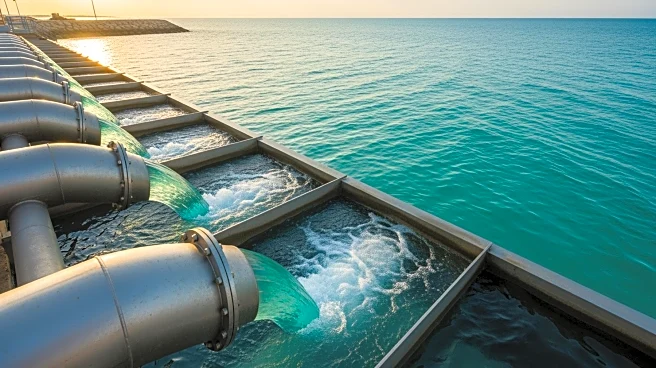
water supply to the Husab uranium mine and support local communities in the Erongo region. The project, known as the Erongo Sunam Desalination Project, will see Swakop Uranium holding a 70% stake, with NamWater owning the remaining 30%. The plant is expected to produce 20 million cubic meters of water annually, providing a stable and cost-effective water source for the mine and surrounding areas. The project has been in planning since 1998 and is now moving into the implementation phase, which includes engineering, environmental assessments, and construction planning.
Why It's Important?
The development of this desalination plant is crucial for Namibia, one of Africa's driest countries, as it addresses the critical need for water in the Erongo region. The Husab mine, being the largest open-pit uranium mine globally, is a significant water consumer, and this project will ensure its operations are sustainable. Additionally, the plant will support local communities, contributing to regional development. The involvement of a Chinese state-owned enterprise highlights China's growing influence in Africa's infrastructure projects, potentially leading to increased economic ties between the two regions. The project's success could serve as a model for similar initiatives in other water-scarce areas.
What's Next?
The next steps for the project include the formal registration of the joint venture company, detailed engineering work, and securing financing. Environmental assessments will also be conducted to ensure compliance with local and international standards. As the project progresses, it will likely attract attention from other international investors and stakeholders interested in sustainable infrastructure development in Africa. The successful completion of the plant could lead to further collaborations between Chinese companies and African nations in the water and energy sectors.