







What's Happening?
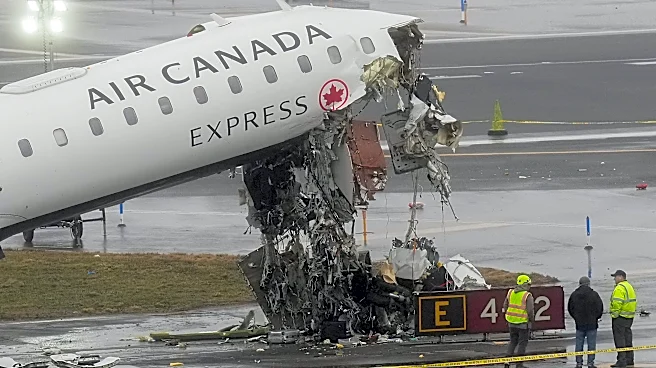
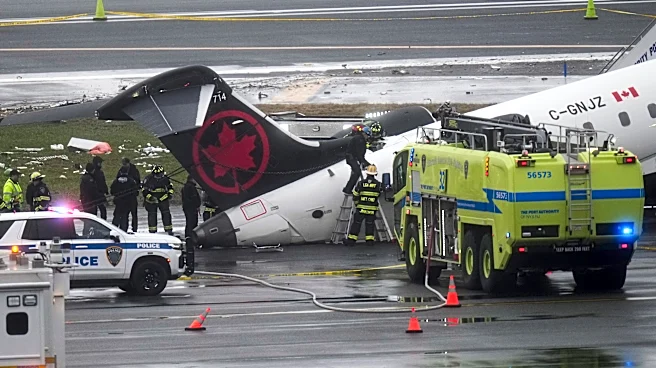
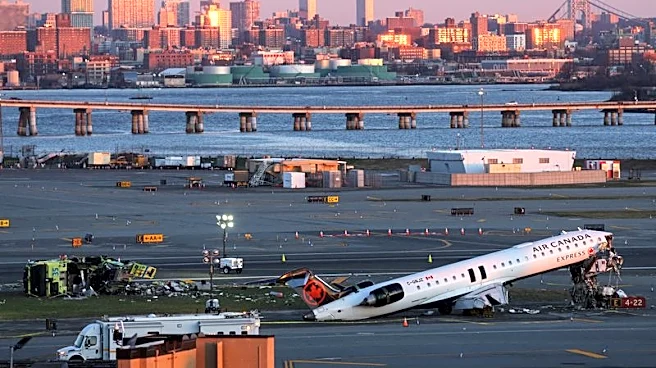
The National Transportation Safety Board (NTSB) has released a preliminary report on the fatal collision at LaGuardia Airport, highlighting significant communication failures. On March 22, an Air Canada Express jet collided with a fire truck on the runway,
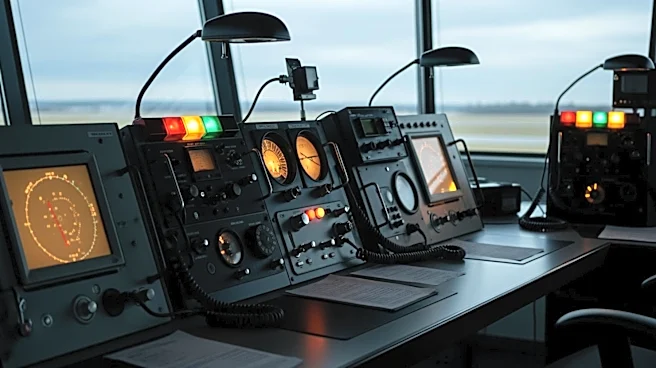
killing both pilots and injuring 40 others. The report indicates that the fire truck, part of a convoy responding to an emergency, was cleared to cross the runway just seconds before the Air Canada plane landed. Due to simultaneous radio transmissions and the absence of transponders on the emergency vehicles, the truck driver did not realize the 'stop' command was directed at him. The airport's systems failed to predict the potential conflict, contributing to the crash.
Why It's Important?
This incident reveals significant flaws in airport safety and communication systems, particularly the reliance on verbal instructions without adequate technological support. The absence of transponders on emergency vehicles and the failure of the airport's monitoring systems to alert controllers to the impending collision highlight critical safety gaps. The crash, marking the first fatal incident at LaGuardia in decades, underscores the need for improved coordination and technology to prevent similar accidents. The findings could lead to policy changes and technological upgrades at airports nationwide to enhance safety and prevent runway incursions.
What's Next?
The NTSB's investigation is ongoing, with a full report expected within two years. The Port Authority is reviewing the preliminary findings to strengthen safety protocols and prevent future incidents. Potential changes could include mandatory transponders for all ground vehicles and enhanced training for air traffic controllers to manage high-pressure situations. The incident may also prompt a reevaluation of resource allocation and staffing in control towers, particularly during peak operational times, to ensure adequate oversight and communication.