





What's Happening?
The Director General of the World Health Organization (WHO), Tedros Adhanom Ghebreyesus, is in Tenerife to oversee the safe evacuation of nearly 150 passengers from the MV Hondius, a cruise ship affected by a hantavirus outbreak. The ship is scheduled
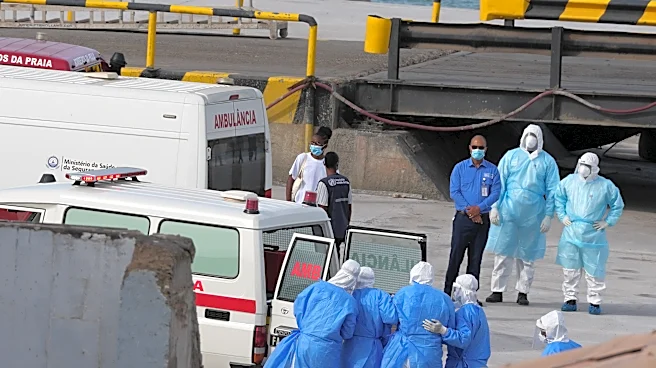
to arrive at Tenerife's Granadilla port early Sunday morning. The outbreak, which has resulted in three deaths, is caused by the hantavirus, typically spread through contact with rodent droppings. Tedros reassured residents that the situation is not akin to COVID-19, emphasizing that the public health risk remains low. Spanish authorities have prepared a detailed plan for the ship's arrival, ensuring passengers are transported in sealed vehicles and kept away from residential areas before being repatriated. The U.S. Centers for Disease Control and Prevention (CDC) is sending epidemiologists to assess the risk for American passengers, who will be transported back to the U.S. in a biocontainment unit.
Why It's Important?
The arrival of the MV Hondius in Tenerife highlights the ongoing challenges of managing infectious disease outbreaks on international vessels. The situation underscores the importance of international cooperation and preparedness in public health emergencies. Spain's decision to receive the ship demonstrates solidarity and the capability to handle such crises. For the U.S., the involvement of the CDC and the planned repatriation of American passengers reflect the country's commitment to safeguarding its citizens abroad. The incident also serves as a reminder of the potential risks associated with global travel and the need for robust health monitoring systems.
What's Next?
Following the ship's arrival, passengers will be disembarked in a controlled manner, with Spanish nationals being taken to a military hospital for monitoring. Other passengers will be repatriated to their home countries. The U.S. passengers will be transported to the University of Nebraska Medical Center for further assessment and monitoring. The situation is being closely monitored by health authorities, and further actions will depend on the outcomes of the initial assessments. The incident may prompt discussions on improving protocols for handling similar outbreaks in the future.