


What's Happening?
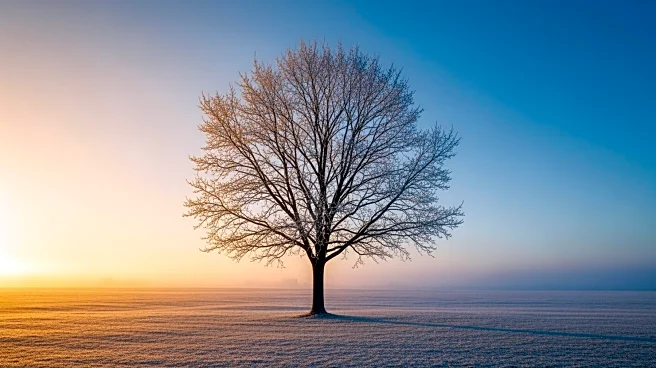
The winter solstice, occurring at 10:03 A.M. on December 21, marks the official start of winter in the Northern Hemisphere. This astronomical event is characterized by the shortest day and longest night of the year. In Washington, D.C., the weather leading
up to the solstice has been chilly but not severe, with temperatures slightly below normal. The solstice represents the moment when the Northern Hemisphere is tilted farthest from the Sun, resulting in minimal daylight. Despite the onset of winter, the weather in the District has retained some autumnal qualities, with clear skies and mild winds.
Why It's Important?
The winter solstice is a key marker in the annual cycle, affecting various aspects of life, including climate, agriculture, and human behavior. It signifies a period of increased darkness, which can influence energy consumption and mental health. The solstice also holds cultural significance, celebrated in various traditions as a time of reflection and renewal. In urban areas like Washington, D.C., the solstice impacts daily life, from commuting patterns to outdoor activities. Understanding the solstice's effects can help communities prepare for the challenges and opportunities of the winter season.