




What's Happening?
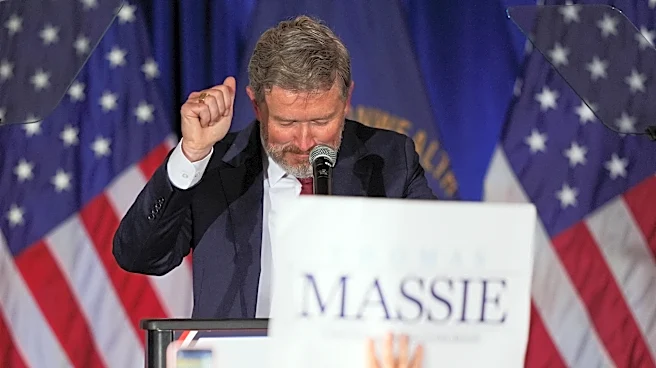
Senator Bernie Sanders has publicly criticized the American Israel Public Affairs Committee (AIPAC) and major donors to President Trump for allegedly spending millions of dollars to defeat Representative Thomas Massie. According to Sanders, this financial
targeting was due to Massie's refusal to align with President Trump's policies without question. Sanders' comments highlight ongoing tensions within the political landscape, where financial influence and political allegiance are often scrutinized. The allegations suggest that Massie's independent stance on certain issues may have prompted significant financial efforts to unseat him, reflecting broader debates about the role of money in politics.
Why It's Important?
The situation underscores the significant impact of financial contributions in U.S. politics, particularly from influential groups like AIPAC and high-profile donors. Such financial interventions can shape election outcomes and influence legislative behavior, raising concerns about the integrity of democratic processes. For politicians like Massie, who choose to diverge from party lines, the threat of financial retaliation could deter independent decision-making. This dynamic may affect legislative priorities and the ability of elected officials to represent their constituents without external pressures. The broader implications for U.S. democracy include potential shifts in policy-making and the balance of power within political parties.