







What's Happening?
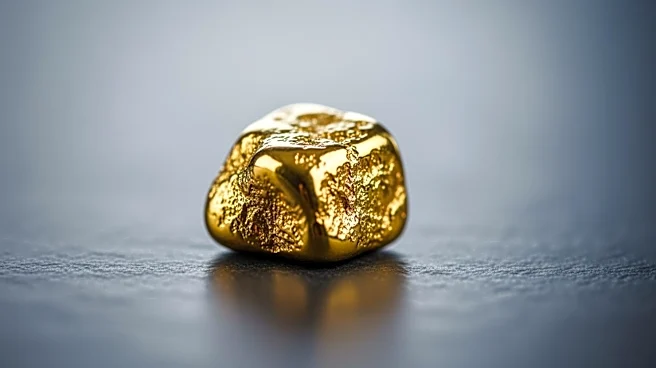
China's central bank has continued its gold accumulation streak, adding 8 tonnes to its reserves in April, marking the 18th consecutive month of increase. This brings China's total official gold holdings to 2,322 tonnes, which constitutes approximately
9% of the country's total foreign exchange reserves. The move is part of a broader strategy to diversify away from foreign currency reserves and strengthen gold's role as a strategic asset. Despite a seasonal decline in jewelry demand, investment in gold-backed exchange-traded funds (ETFs) remains strong, with net inflows of RMB 3.5 billion in April. The domestic gold price has stabilized above RMB 1,000 per gram, reflecting sustained investor interest amid geopolitical uncertainties and declining local government bond yields.
Why It's Important?
China's continued investment in gold highlights its strategic importance as a hedge against geopolitical risks and economic uncertainties. The central bank's actions suggest a shift towards reducing reliance on foreign currency reserves, which could have significant implications for global financial markets. The sustained inflows into gold ETFs indicate a robust demand for gold as a portfolio diversifier, even as equity markets perform strongly. This trend underscores the dual role of gold as both a safe-haven asset and an investment vehicle, influencing global gold prices and market dynamics.
What's Next?
Looking ahead, China's gold market is expected to continue experiencing a divergence between strong official and investment demand and weaker consumer activity. The central bank's ongoing accumulation of gold reserves is likely to persist, reinforcing gold's strategic importance. However, the seasonal softness in jewelry demand and reduced futures trading activity may continue to reflect a cautious consumer environment. The interplay between geopolitical uncertainties, economic conditions, and market dynamics will be crucial in shaping the future trajectory of China's gold market.