


What's Happening?
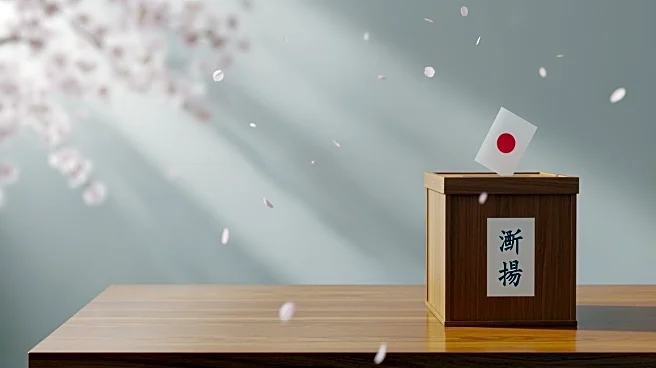
Japan's Prime Minister Sanae Takaichi has announced a snap election, dissolving the Lower House and setting a vote for February 8. This decision comes less than six months into her term, despite the Lower House's term running until October 2028. Takaichi's
move is seen as an attempt to capitalize on her high approval ratings, which are significantly higher than those of her party, the Liberal Democratic Party (LDP). The election aims to strengthen the ruling coalition's hold on parliament amid a united opposition.
Why It's Important?
The snap election is a strategic move by Takaichi to consolidate power and secure a stronger mandate for her government. A successful election could enhance her political standing both domestically and internationally, allowing her to pursue her policy agenda more effectively. The outcome of the election could also impact Japan's diplomatic relations, particularly with the United States and China, as Takaichi seeks to navigate complex geopolitical challenges.
What's Next?
The upcoming election will test Takaichi's ability to maintain her popularity and translate it into electoral success for her party. The results could influence Japan's political landscape, affecting policy decisions and international relations. Observers will be watching closely to see how the opposition's strategy unfolds and whether Takaichi can secure a decisive victory.