




What's Happening?
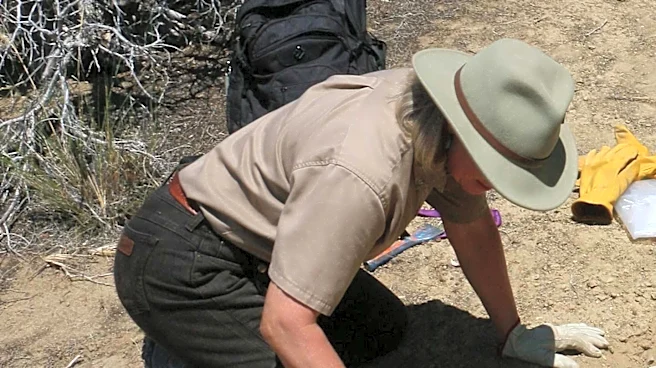
The Denver Museum of Nature & Science is scheduled to undertake a second excavation at Snowmass Village’s Ziegler Reservoir next summer. This new dig follows a significant discovery over a decade ago, in 2010, when a construction crew expanding the reservoir
uncovered a mammoth tusk. The initial excavation yielded more than 35,000 animal bones, including those of mastodons, giant ground sloths, and Ice Age bison, along with plant and insect remains, representing 85,000 years of history. Researchers hope to uncover more fossils and gain a deeper understanding of Colorado's Ice Age paleoenvironment. The new research will focus on how plants, animals, and climate changed during that period in the Rocky Mountains, utilizing new technologies not available during the first dig. The excavation is expected to occur from May to September 2027, coinciding with the reservoir's expansion for water storage.
Why It's Important?
Ziegler Reservoir is recognized as the world's richest high-altitude Ice Age ecosystem, making further excavation critically important for understanding prehistoric life and climate change in North America. The new dig offers an opportunity to apply advanced technologies to analyze the paleoenvironment, providing invaluable data on how ecosystems responded to intense climatic shifts. This research can offer insights into long-term ecological resilience and vulnerability, which is particularly relevant in the context of current climate change concerns. The findings will contribute significantly to paleontology, geology, and climate science, enhancing our knowledge of the Ice Age in the Rocky Mountains and potentially informing future environmental strategies. The project also serves as a public education initiative, sharing scientific discoveries with the community.
What's Next?
The excavation at Ziegler Reservoir is planned for May to September 2027, coinciding with the reservoir's expansion to increase water storage capacity by 40 million gallons. Researchers, including those who participated in the first dig like Patrick O’Connor and Gussie McCracken from the Denver Museum of Nature & Science, will be involved. Several events are scheduled over the next year to commemorate the research and share new discoveries with the public. The findings from this second dig are expected to provide more context for the initial discoveries and offer a more comprehensive understanding of the Ice Age ecosystem. The dual purpose of the project—scientific discovery and water management—highlights a collaborative approach to addressing both historical and contemporary environmental challenges.
Beyond the Headlines
The ongoing research at Ziegler Reservoir underscores the profound connection between geological history and contemporary environmental challenges, particularly water scarcity. The decision to expand the reservoir due to prolonged drought highlights the immediate pressures faced by communities in the American West. The simultaneous excavation and expansion demonstrate a pragmatic approach to resource management, where infrastructure development can also facilitate scientific exploration. This project could serve as a model for integrating scientific inquiry into essential public works, maximizing the value derived from land use changes. It also emphasizes the long-term impact of climate on ecosystems, from ancient Ice Ages to modern droughts, reinforcing the urgency of understanding and adapting to environmental shifts.