



What's Happening?
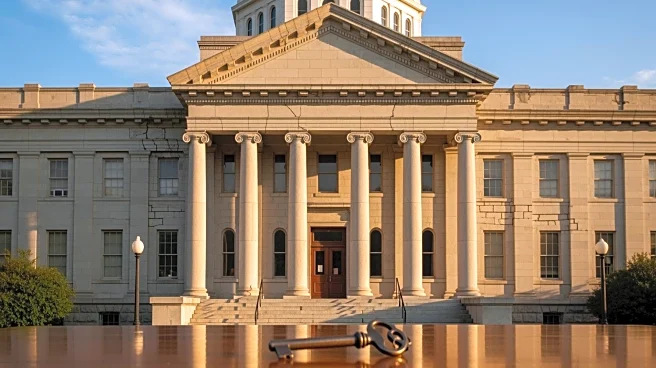
The federal judiciary has formally requested Congress to grant it control over the management of the nation's courthouses, citing severe deterioration and safety hazards due to billions of dollars in unmet repairs. The Administrative Office of the U.S.
Courts highlighted issues such as trapped individuals in malfunctioning elevators, ceiling collapses during trials, and health risks from mold and Legionella bacteria. The General Services Administration (GSA), which currently manages these properties, has been criticized for delays in addressing these issues, attributed to appropriation process challenges. The judiciary occupies 396 government-owned buildings and leases 379 spaces, paying $1.3 billion in rent to the GSA. Despite these payments, a backlog of $8.3 billion in repairs remains unaddressed, prompting the judiciary's request for direct management to expedite necessary maintenance.
Why It's Important?
This development underscores a significant challenge in the management of federal properties, highlighting the potential risks to public safety and the efficient functioning of the judiciary. The deteriorating conditions of courthouses not only pose immediate safety hazards but also threaten the integrity of judicial proceedings. If the judiciary gains control over these properties, it could lead to more timely and effective maintenance, ensuring safer environments for legal proceedings. However, this shift would require legislative action and could set a precedent for other federal agencies seeking similar autonomy. The situation also reflects broader issues within federal property management, particularly the complexities of the appropriation process that delay critical infrastructure repairs.
What's Next?
The judiciary's request will require congressional approval, which could lead to debates over the appropriate management of federal properties. If granted, the judiciary would need to establish a framework for managing these properties effectively. Meanwhile, the GSA has expressed willingness to collaborate with the judiciary to improve conditions, though it maintains that the current issues are not solely due to mismanagement. The outcome of this request could influence future policies regarding federal property management and funding allocation processes.