









What's Happening?
The recent conflict involving Iran has prompted a global push to enhance oil and gas storage capabilities, as countries aim to safeguard against future supply disruptions. The closure of the Strait of Hormuz, a critical chokepoint for global oil and liquefied
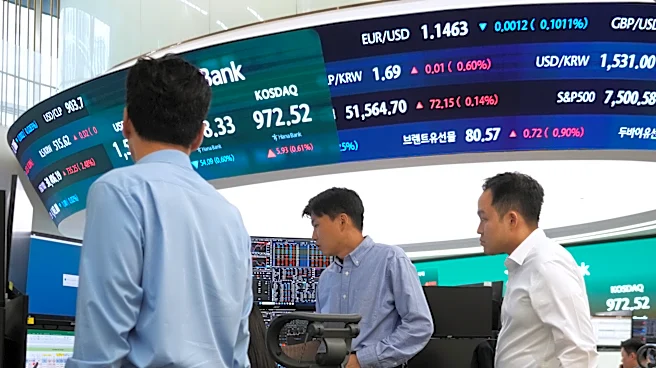
natural gas (LNG) supplies, led to significant market upheaval, with Brent crude prices nearing $120 per barrel. In response, the International Energy Agency (IEA) coordinated a release of 400 million barrels from strategic petroleum reserves (SPRs), with the U.S. contributing significantly. This move highlighted the importance of emergency reserves, a strategy developed post-1973 Arab Oil Embargo. Countries like China, which has built substantial reserves, managed to mitigate economic impacts by reducing crude purchases during the conflict. Meanwhile, nations with limited reserves, such as India and Pakistan, faced economic strain and are now considering expanding their SPRs.
Why It's Important?
The drive to build larger oil reserves is crucial for energy security, especially for countries heavily reliant on imports from volatile regions. The conflict underscored the vulnerability of global energy markets to geopolitical tensions, prompting nations to reassess their energy strategies. Expanding SPRs could stabilize markets by providing a buffer against supply shocks, potentially preventing drastic price spikes. For major importers like India, increasing reserves is vital to meet future demand and reduce dependency on external sources. This shift could also influence global oil prices, as increased storage capacity might lead to higher demand for crude oil, impacting market dynamics.
What's Next?
Countries are expected to continue expanding their strategic reserves, with India and Pakistan already planning significant increases. This trend may lead to a sustained demand for crude oil, influencing global prices. Additionally, energy producers in the Gulf are exploring storage options outside their region to maintain export flexibility. The IEA anticipates a surge in global oil supply as Middle East production recovers, which could offset the increased demand from storage expansions. However, any delays in production recovery could lead to prolonged market instability.
Beyond the Headlines
The expansion of strategic reserves could lead to a more resilient global energy market, reducing the impact of future disruptions. This development may encourage countries to adopt more sustainable energy policies, focusing on diversification and efficiency. The geopolitical landscape could also shift, as nations with substantial reserves gain leverage in energy negotiations. Furthermore, the emphasis on energy security might accelerate investments in alternative energy sources, contributing to a gradual transition towards a more sustainable energy future.