



What's Happening?
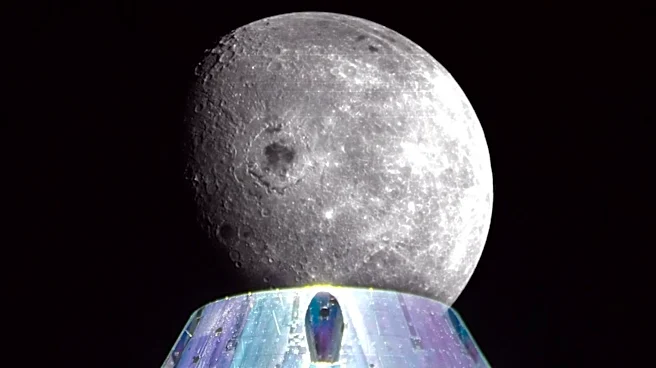
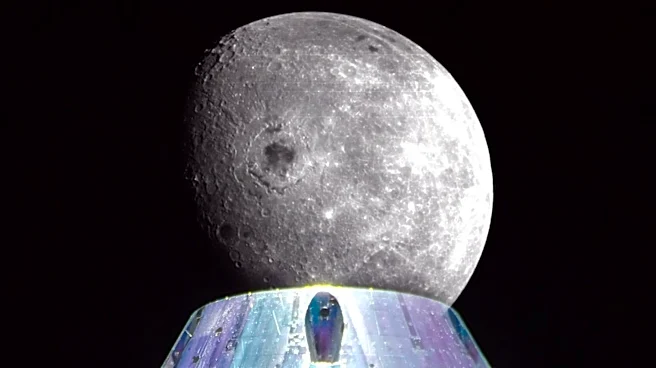
Researchers from The Ohio State University have introduced a novel AI model named LUMINA, designed to identify safe landing sites and develop human outpost strategies for future space missions to the Moon and potentially Mars. This development was presented
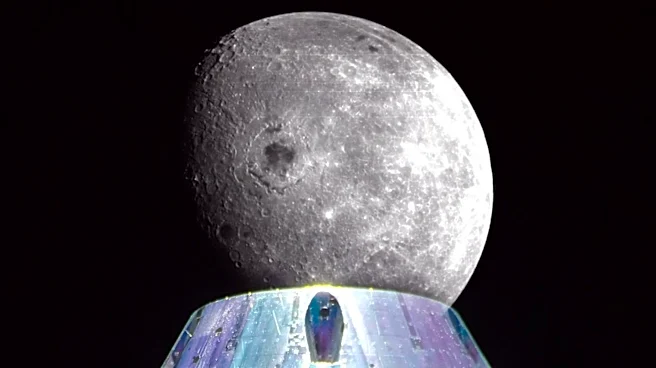
at the 58th Annual Meeting of the Division for Planetary Sciences (DPS 58) of the American Astronomical Society. LUMINA is an agentic AI framework that evaluates various lunar surface data, including topography, terrain hazards, scientific value, geology, and surface properties, to maximize mission success and effectiveness for both human habitation and scientific research. The model builds upon previous research by the same group, called the Large Language-and-Vision Assistant for Lunar Exploration (LLaVA-LE), which demonstrated its capability to analyze and describe orbital images of the lunar surface. Gokce Inal, a PhD candidate in Civil Environmental and Geodetic Engineering at The Ohio State University and lead author of the study, emphasized that AI systems will become critical tools for space exploration, assisting in the analysis of vast datasets required for future missions.
Why It's Important?
The development of LUMINA is crucial for the future of U.S. space exploration, particularly for NASA's Artemis program, which aims to establish a permanent human presence on the Moon and eventually send humans to Mars. By leveraging AI, mission planners can more efficiently and accurately identify optimal landing sites, considering critical resources like water ice and areas of scientific interest. This technology can significantly reduce the risks and costs associated with human spaceflight by improving site selection and resource utilization strategies. The ability to analyze millions of images and datasets with AI will streamline the planning process, making lunar and Martian missions more feasible and safer. This advancement positions U.S. scientific institutions at the forefront of integrating AI with planetary science, potentially accelerating the timeline for deep space exploration and the establishment of off-world outposts. It also highlights the growing importance of interdisciplinary research, bridging AI and planetary science to overcome complex challenges in space.
What's Next?
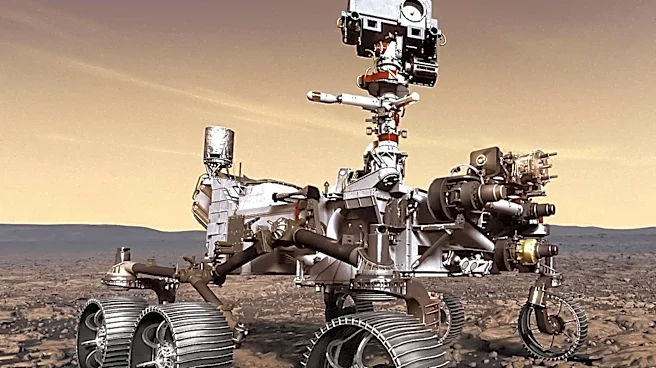
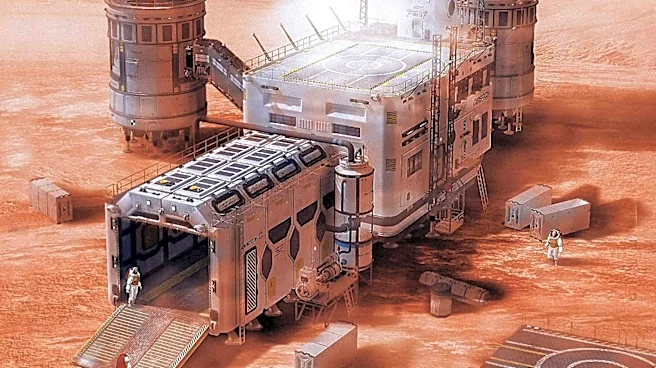
As new lunar data becomes available through missions like NASA's Artemis program, the LUMINA system is expected to improve further, enhancing its ability to support future mission planning. The researchers envision expanding LUMINA's application beyond the Moon to other planetary bodies, specifically Mars. The integration of AI into the Moon to Mars Architecture, NASA's strategic framework for developing technologies for lunar and Martian living, will be a key area of focus. This includes using AI to optimize power systems, transportation, habitation, life support, robotics, construction, in-situ resource utilization (ISRU), and communications. The continued development and refinement of AI models like LUMINA will be essential for creating self-sustaining systems on other celestial bodies, reducing reliance on Earth-based resupplies, and ultimately enabling long-duration human missions.
Beyond the Headlines
The ethical and operational implications of increasingly relying on AI for critical decisions in space exploration are significant. While AI offers unparalleled analytical capabilities, questions may arise regarding human oversight, decision-making autonomy, and the potential for unforeseen errors in complex, high-stakes environments. The development of LUMINA also underscores a broader trend of technological convergence, where advancements in AI are not just supporting but fundamentally transforming scientific fields like planetary science. This shift could lead to new paradigms in how space missions are conceived, planned, and executed, potentially democratizing access to complex data analysis for a wider range of researchers. Furthermore, the success of such AI-driven tools could influence national and international space policies, emphasizing the need for robust AI governance frameworks in space exploration to ensure responsible and collaborative use of these powerful technologies.