
What's Happening?
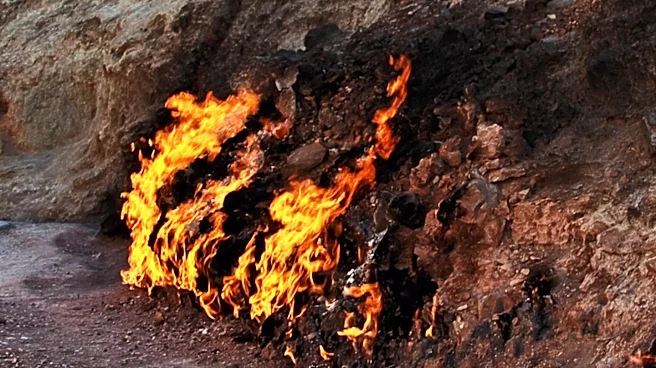
A natural gas pipeline exploded on Tuesday afternoon near La Boca, New Mexico, close to the Colorado border, sending flames reportedly 100 to 150 feet into the air. The explosion, which occurred around
2 p.m., sparked a wildland fire in San Juan County, New Mexico. Jerrod T. Jones, a spokesman for Harvest Midstream Co., confirmed that crews responded to the incident, and the flow of gas to the affected portion of the system was stopped. No injuries have been reported, and all crew members are accounted for. The Los Pinos Fire Protection District provided mutual aid to the scene, where the wildland fire was reportedly smoldering after the pipeline was shut in. Residents described the sound of the explosion as intensely loud, comparable to an F-16 jet, and felt the ground shake.
Why It's Important?
This incident highlights the inherent risks associated with natural gas infrastructure, particularly pipelines that traverse remote or environmentally sensitive areas. Pipeline explosions can lead to significant environmental damage, including wildfires, and pose serious safety threats to nearby communities and workers. While no injuries were reported in this instance, such events underscore the critical need for stringent safety regulations, regular maintenance, and effective emergency response protocols in the energy sector. For the U.S. energy landscape, pipeline safety is a continuous concern, impacting energy supply, environmental protection, and public trust. The incident also draws attention to the potential for widespread disruption and the rapid deployment of emergency services required to contain such events.
What's Next?
An investigation into the cause of the pipeline explosion will be initiated to determine what led to the rupture and subsequent fire. Harvest Midstream Co. will likely work with regulatory bodies to assess the damage, conduct repairs, and implement any necessary preventative measures to avoid future incidents. Emergency responders will continue to monitor the wildland fire to ensure it is fully extinguished and does not reignite. The incident may prompt a review of pipeline safety protocols in the region and potentially lead to increased scrutiny of natural gas infrastructure nationwide. Local communities and environmental groups may also call for greater transparency and accountability from pipeline operators regarding safety and environmental impact.
Beyond the Headlines
The explosion of a natural gas pipeline carries broader implications beyond the immediate incident. It reignites discussions about the safety and environmental footprint of fossil fuel infrastructure, especially as the U.S. continues to rely on natural gas for energy. The event could fuel debates on energy policy, the transition to renewable energy sources, and the balance between energy security and environmental protection. Furthermore, it underscores the vulnerability of critical infrastructure to both operational failures and external factors, potentially influencing investment in pipeline monitoring technologies and emergency preparedness. The incident serves as a stark reminder of the potential for industrial accidents to impact both human safety and natural ecosystems, prompting a re-evaluation of risk management strategies in the energy sector.