







What's Happening?
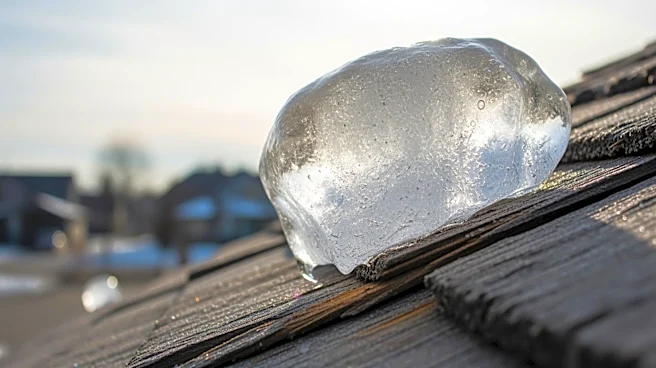
A large chunk of dirty ice crashed through the roof of a home in Whittier, California, causing significant concern among residents. The incident occurred when Yudar Grau, a resident of the home, heard a loud noise resembling an explosion while taking
a nap. Upon investigation, he discovered a hole in the ceiling and chunks of ice scattered across the living room. The homeowner, Thania Magana, suspects the ice may have fallen from an aircraft flying overhead at the time. Los Angeles County Supervisor Janice Hahn has requested the Federal Aviation Administration (FAA) to investigate the incident, citing potential aviation safety concerns over densely populated areas. The FAA has stated that it investigates all reports of ice falling from airplanes. While ice can form on aircraft at high altitudes and fall as the plane descends, such occurrences are rare. There is also a possibility that the ice did not originate from an aircraft, as scientists study megacryometeors, large ice chunks that can fall from the sky under certain conditions.
Why It's Important?
The incident raises significant safety concerns for communities located under flight paths, particularly in densely populated areas like Los Angeles County. If the ice originated from an aircraft, it highlights potential risks associated with aviation operations over residential areas. The FAA's investigation could lead to increased scrutiny of flight safety protocols and possibly result in new regulations to prevent similar incidents. For residents, the event underscores the vulnerability of living near busy air traffic routes and the need for effective safety measures. The outcome of the investigation could influence public policy regarding aviation safety and community protection, potentially affecting how air traffic is managed in urban areas.
What's Next?
The FAA will conduct a thorough investigation to determine the source of the ice and assess any potential safety violations. Depending on the findings, there may be recommendations or mandates for airlines to review and possibly enhance their safety protocols. Local authorities and community leaders may also engage in discussions with aviation regulators to address public concerns and explore measures to mitigate risks. The incident could prompt further research into megacryometeors and their potential impact on populated areas, leading to broader scientific inquiries and safety assessments.
Beyond the Headlines
This event highlights the complex interplay between urban development and aviation safety. As cities expand and air traffic increases, the potential for such incidents may rise, necessitating a reevaluation of current safety standards. The incident also brings attention to the phenomenon of megacryometeors, which remain a scientific curiosity with implications for understanding atmospheric processes. The FAA's response and any subsequent policy changes could set precedents for how similar incidents are handled in the future, balancing the needs of urban populations with the demands of modern aviation.