



What's Happening?
US Agriculture Secretary Brooke Rollins has expressed concerns over the United States' dependence on China for food, fertilizer, and other agricultural inputs, labeling it as an 'existential' threat to national security. Rollins emphasized the importance
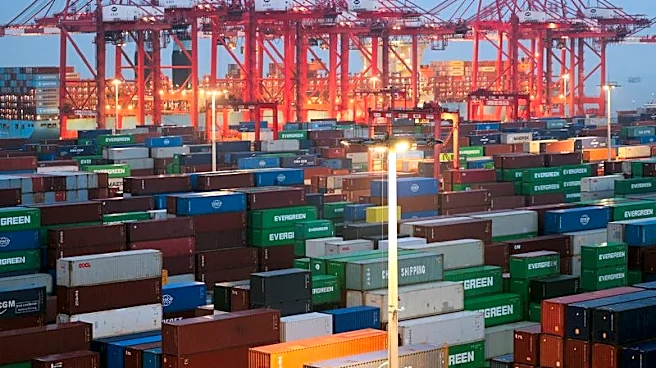
of food security in preserving American liberty and freedom during her testimony before the House Committee on Agriculture. Her comments coincide with the Trump administration's proposal for a reduced fiscal 2027 budget for the US Agriculture Department, seeking $20.8 billion in discretionary budget authority, a decrease from the previous year. The ongoing US-China trade tensions, exacerbated by tariffs, have impacted American farmers, who rely heavily on China as a key export market. Additionally, disruptions in shipping through the Strait of Hormuz have led to increased fuel and fertilizer costs, further straining the agricultural sector.
Why It's Important?
The reliance on China for agricultural inputs poses significant risks to the US economy and national security. As tariffs continue to affect trade, American farmers face challenges in maintaining their export markets, potentially leading to economic instability in the agricultural sector. The increased costs of fuel and fertilizer due to geopolitical tensions further compound these issues, threatening the viability of US agriculture. Rollins' warning highlights the need for diversification in supply chains to ensure food security and protect American interests. The proposed budget cuts for the Agriculture Department may limit resources available to address these challenges, potentially impacting the sector's ability to adapt and innovate.
What's Next?
The Trump administration's budget proposal will undergo scrutiny and debate in Congress, where lawmakers will assess the implications of reduced funding for the Agriculture Department. Stakeholders in the agricultural industry may advocate for policies that promote domestic production and reduce reliance on foreign inputs. Additionally, ongoing geopolitical tensions, such as the situation in the Strait of Hormuz, will continue to influence fuel and fertilizer costs, necessitating strategic planning and risk management by US farmers. The administration may explore alternative trade agreements and partnerships to mitigate the impact of tariffs and ensure stable export markets.