
What's Happening?
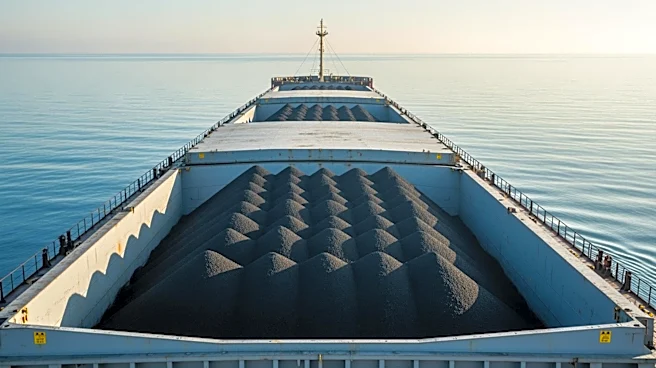
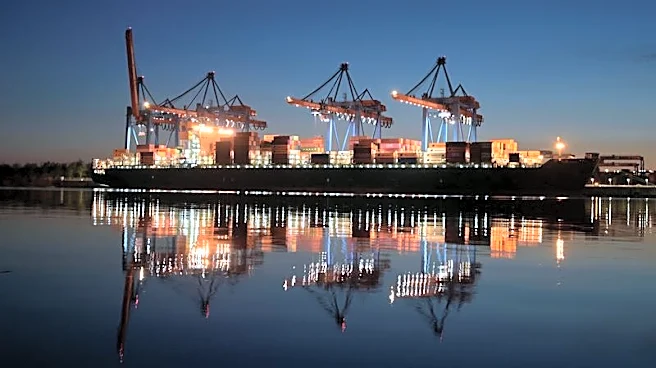
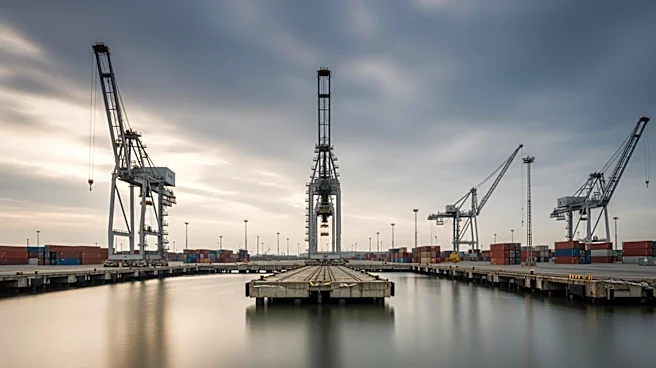
The Port of Bujumbura in Burundi is struggling to recover from severe flooding that occurred in late 2023 and early 2024. The flooding, caused by intense rainfall that raised Lake Tanganyika's water levels,
resulted in significant damage to the port and surrounding infrastructure. The United Nations Development Program (UNDP) reports that over 240,000 people were affected, with more than 48,000 displaced and total losses estimated at $210 million. The port, crucial for Burundi's economy as it handles over 80% of the country's imports and exports, is now being reimagined to withstand future climate-related challenges. A detailed engineering study suggests that future infrastructure must be resilient to evolving climate and hydrological risks.
Why It's Important?
The Port of Bujumbura is vital for Burundi's economy, serving as a key inland water transport system that connects the country to regional trade networks. The flooding highlights the vulnerability of critical infrastructure in developing countries to climate change. Strengthening the port's resilience is essential for maintaining national stability and regional connectivity. The situation underscores the need for international support and investment in climate adaptation measures to protect economies in similar vulnerable regions.
What's Next?
Rebuilding efforts will focus on enhancing the port's resilience to future climate events. The UNDP and European Union are involved in planning infrastructure improvements, including better drainage systems and reinforced facilities. The project aims to support regional trade and connectivity across Lake Tanganyika. Continued international collaboration and investment will be crucial in ensuring the port's long-term functionality and economic contribution.