





What's Happening?
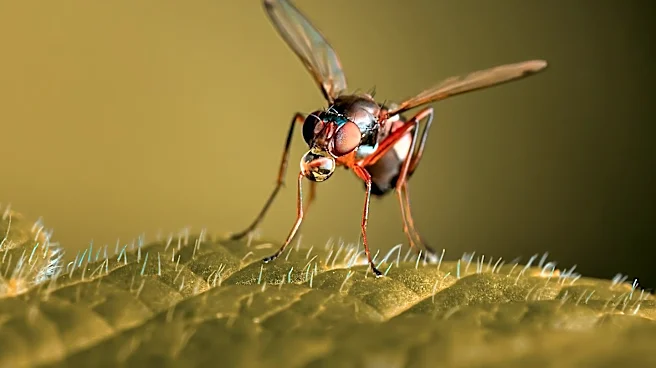
The U.S. Department of Agriculture (USDA) is preparing to test NovoFly, a genetically engineered insect, to combat the New World screwworm outbreak affecting the U.S. livestock industry. Since June, at least 42 cases have been reported in Texas and New Mexico.
The USDA aims to prevent further spread of the screwworm, which is endemic to parts of South America and has recently moved into Central America and Mexico. The U.S. Environmental Protection Agency has proposed registering NovoFly, potentially making it the first genetically modified insect to receive government clearance. The USDA plans to test NovoFly's survival outside laboratory conditions in Panama, pending approval from the Panamanian government.
Why It's Important?
The screwworm outbreak poses significant threats to animal health, welfare, trade, and the food supply chain. If not controlled, it could lead to billions of dollars in losses due to increased animal suffering, calf losses, treatment costs, and trade disruptions. The USDA's efforts to deploy NovoFly are crucial in preventing the establishment of wild screwworm populations, which could exacerbate the already tight cattle market. The success of this initiative could set a precedent for using genetically engineered insects in pest control, potentially transforming agricultural practices and biosecurity measures.
What's Next?
The USDA plans to conduct field tests in Panama to assess NovoFly's viability in natural conditions. If successful, production may shift to a new facility in Texas by late 2027 to ensure continuity and prevent potential issues at the Panama facility. The USDA is also deploying traps with attractants to monitor screwworm presence. The outcome of these tests will determine the next steps in controlling the screwworm outbreak and may influence future regulatory decisions on genetically modified organisms in agriculture.