







What's Happening?
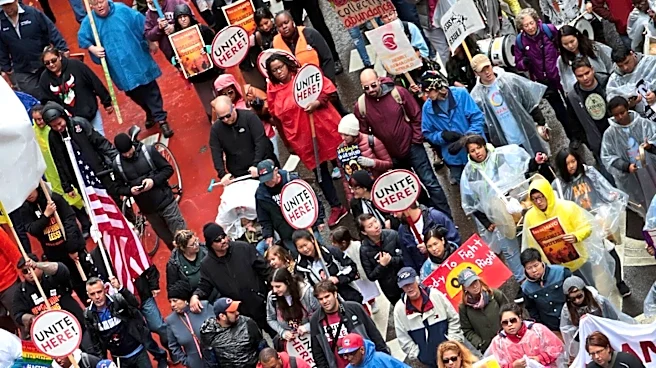
Baltimore residents voiced strong opposition to Baltimore Gas and Electric's (BGE) proposed rate increase during the final Public Service Commission (PSC) meeting held on Wednesday night. Customers urged the PSC to reject the rate hike, citing concerns
about affordability and financial strain. BGE's proposal, if approved, would result in an average increase of $8 per month on residential customers' bills. BGE spokesperson Nick Alexopulos stated that the proposed increase is necessary to fund critical infrastructure improvements, including replacing utility poles, restoring service after storms, and upgrading equipment, attributing the need to rising labor and material costs. Alexopulos emphasized that these investments are the minimum required to ensure reliable service. However, residents like Sheron Thornton shared personal struggles, highlighting their inability to keep up with current utility bills and expressing fears of being unable to afford essential services.
Why It's Important?
This proposed rate hike carries significant implications for Baltimore households and the broader economic landscape of the city. For many residents, an additional $8 per month can represent a substantial burden, especially for those already struggling with rising costs of living, food, and other utilities. The public outcry underscores a growing affordability crisis, where essential services like electricity become increasingly inaccessible. If approved, the rate increase could exacerbate financial hardship for vulnerable populations, potentially leading to increased utility shut-offs and a decline in overall quality of life. Conversely, BGE argues that the investment is crucial for maintaining a reliable and safe energy infrastructure, which is vital for economic stability and public safety. The PSC's decision will reflect a balancing act between ensuring utility solvency and protecting consumer welfare.
What's Next?
The Public Service Commission is expected to issue a final decision on BGE's proposed rate increase by the end of January. Leading up to this decision, the PSC will weigh the arguments presented by BGE regarding infrastructure needs against the widespread concerns raised by Baltimore residents about affordability. The outcome will directly impact the monthly utility bills of BGE customers and could set a precedent for future rate adjustments by other utility companies in Maryland. Residents and advocacy groups will likely continue to monitor the situation closely and may engage in further actions depending on the PSC's ruling. BGE has directed customers seeking assistance to bge.com/heretohelp, indicating that support programs may be available regardless of the final decision.
Beyond the Headlines
The debate over BGE's rate hike reflects a larger national tension between the need for utility infrastructure modernization and the growing economic pressures on consumers. As energy grids age and climate change leads to more frequent and severe weather events, utilities face increasing costs for maintenance, upgrades, and storm recovery. These costs are often passed on to consumers, creating a cycle of rising bills. This situation also highlights the broader issue of energy equity, where low-income households disproportionately bear the brunt of utility cost increases. The outcome in Baltimore could influence how other cities and states approach similar challenges, potentially spurring discussions on alternative funding mechanisms for infrastructure, enhanced consumer protection policies, or more robust utility assistance programs to ensure that essential services remain affordable for all citizens.