


What's Happening?
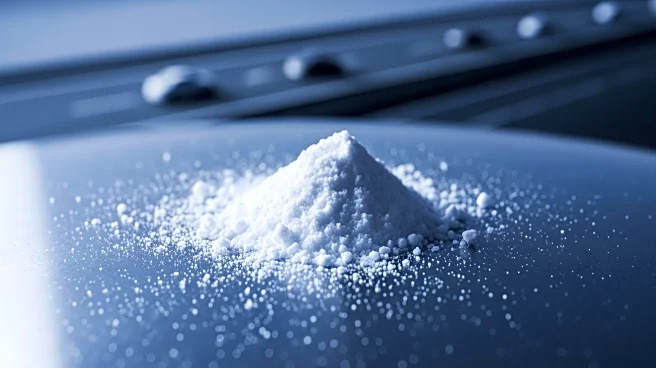
The Environmental Protection Agency (EPA) has confirmed that the chemical compound spilled in Garnett, Kansas, on December 31, 2025, was sodium aluminate. This identification follows laboratory analysis that supports the EPA's initial field screening
results with a high level of confidence. Sodium aluminate, a strong base with a pH level of 14, is commonly used in water and wastewater treatment, paper and glass manufacturing, and as a solidification accelerant in construction. The spill affected over 260 vehicles along a two-mile stretch of roadway. The EPA responded to the incident to prevent potential human exposure, treating the impacted vehicles with a vinegar-water solution followed by a traditional car wash. The source of the spill remains unidentified.
Why It's Important?
The identification of sodium aluminate in the Kansas spill is significant due to the potential health and environmental risks associated with exposure to strong bases. Sodium aluminate's corrosive nature can cause damage to vehicles and infrastructure, and its presence in the environment could pose risks to human health if not properly managed. The EPA's swift response highlights the importance of regulatory oversight in managing chemical spills and protecting public safety. This incident underscores the need for stringent safety protocols in the handling and transportation of industrial chemicals to prevent similar occurrences in the future.
What's Next?
The EPA will likely continue its investigation to identify the party responsible for the spill and assess any long-term environmental impacts. Further actions may include implementing additional safety measures and regulations to prevent future spills. The agency may also engage with local authorities and communities to ensure ongoing monitoring and remediation efforts. Stakeholders, including local businesses and residents, will be keenly interested in the outcomes of these investigations and any potential policy changes that may arise.