







What's Happening?
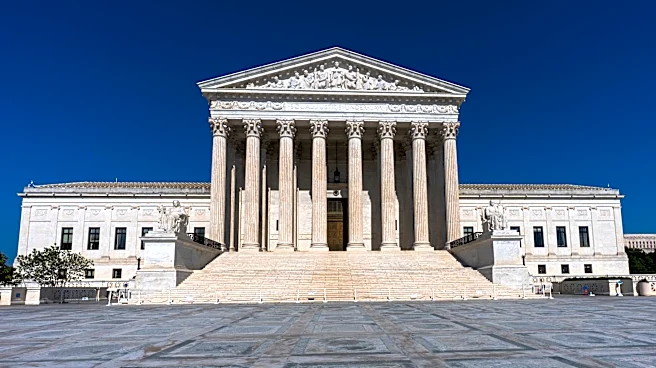
The U.S. Supreme Court has ruled in favor of the Federal Communications Commission (FCC) in a case involving major telecom companies AT&T and Verizon. The court's 8-1 decision supports the FCC's authority to impose fines on these companies for failing
to protect customer data privacy. The case centered on the FCC's in-house proceedings for levying fines, which AT&T and Verizon argued violated their constitutional right to a jury trial. The ruling, authored by Chief Justice John Roberts, maintains that the FCC's process does not prevent companies from challenging fines in court. Justice Clarence Thomas dissented, criticizing the decision as unfair to the companies. The FCC had fined AT&T $57 million and Verizon $47 million for allegedly selling customer location data without consent.
Why It's Important?
This ruling is significant as it reinforces the FCC's ability to regulate and enforce data privacy laws, ensuring that telecom companies are held accountable for protecting sensitive customer information. The decision also highlights the balance between agency enforcement powers and constitutional rights, as it allows companies to challenge fines in court. For consumers, this means continued oversight of how their data is handled, although the process for imposing penalties may become more prolonged. The ruling could influence how other federal agencies enforce regulations, potentially affecting industries beyond telecommunications.
What's Next?
Following the Supreme Court's decision, telecom companies may face more rigorous scrutiny and enforcement actions from the FCC regarding data privacy. Companies are likely to continue challenging fines in court, which could lead to prolonged legal battles. The decision may also prompt other federal agencies to review their enforcement procedures to ensure they align with constitutional requirements. Additionally, the ruling could lead to legislative discussions on data privacy and the role of federal agencies in regulating it.