






What's Happening?
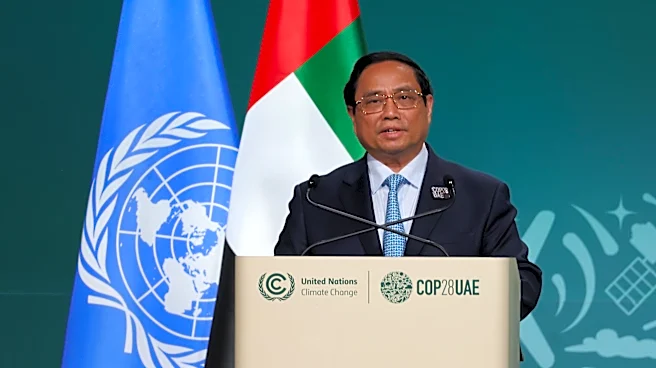
The coalition advocating for an international Fossil Fuel Treaty has grown to 30 countries, with new additions including Saint Vincent and the Grenadines, Guatemala, Panama, Nepal, Kenya, and Ghana. This expansion was announced at the 31st United Nations
Climate Change Conference (COP31) in Antalya, Türkiye, on November 18, 2026. These nations, predominantly from the Global South, are intensifying their demands for a structured international framework to phase out coal, oil, and gas. They argue that existing climate commitments lack clear implementation plans, timelines, and financial support for an equitable transition. Ambassador Kevin Hope of Saint Vincent and the Grenadines highlighted that countries least responsible for climate change are demonstrating significant leadership in addressing it, often while facing severe climate impacts like hurricanes. Ministers at COP31 are pushing for a legally binding instrument to establish clear rules, responsibilities, and financial mechanisms for an orderly transition away from fossil fuels, emphasizing that current negotiations have not yielded a concrete plan since the COP28 agreement to transition away from fossil fuels.
Why It's Important?
The growing Fossil Fuel Treaty Coalition signifies a significant push from developing nations for concrete action on climate change, particularly regarding fossil fuel phase-out. This initiative challenges the traditional pace and scope of climate negotiations, which have often been criticized for lacking actionable frameworks. The coalition's emphasis on an international legal instrument reflects a desire for accountability and equitable burden-sharing, especially concerning climate finance and technology transfer from developed to developing countries. The participation of countries like Kenya, which recently signed a partnership agreement with the Fossil Fuel Treaty initiative, underscores a commitment to national energy transitions and economic diversification. This movement could influence future international climate policy, potentially leading to more stringent global regulations on fossil fuel production and consumption, impacting energy markets, investment in renewable technologies, and the geopolitical landscape of energy resources.
What's Next?
The Fossil Fuel Treaty Coalition plans to continue advancing discussions on transitioning away from fossil fuels through ongoing COP31 negotiations and the Santa Marta Process. A key upcoming event is the Second International Conference on the Just Transition Away from Fossil Fuels, scheduled for July 2027 in Tuvalu. These platforms will serve as crucial venues for member states to refine their proposals, build broader international support, and pressure major emitters to commit to a legally binding framework. The coalition's growing numbers and unified voice are likely to exert increased pressure on the final COP31 cover text to include more explicit commitments and mechanisms for fossil fuel phase-out. Furthermore, the initiative aims to secure adequate financing and technical resources for national energy transitions, with an expectation that developed countries will lead the phase-out process. The outcome of these discussions could shape future climate finance flows and international cooperation on renewable energy development.
Beyond the Headlines
The expansion of the Fossil Fuel Treaty Coalition highlights a deeper geopolitical shift in climate leadership, with nations from the Global South increasingly asserting their agency and demanding justice in climate action. This movement challenges the historical power dynamics in international climate negotiations, where developed nations have often dictated the agenda. The call for a legally binding treaty reflects a growing frustration with the perceived inadequacy of voluntary commitments and the slow pace of implementation under existing agreements like the Paris Agreement. Ethically, the coalition's stance underscores the principle of common but differentiated responsibilities, arguing that those who have contributed least to the climate crisis should not bear the brunt of its impacts or the costs of transition. Legally, the initiative seeks to establish a new international legal instrument that could fundamentally alter global energy governance, potentially leading to legal challenges against continued fossil fuel expansion and creating new precedents for international environmental law.