




What's Happening?
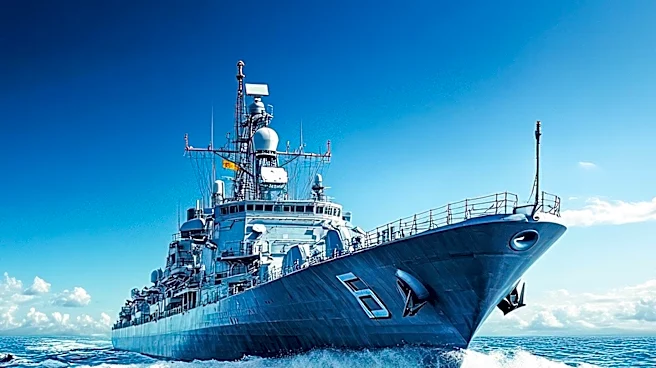
Admiral Sam Paparo, commander of the U.S. Pacific Command (PACOM), has emphasized the urgent need for the U.S. military to modernize its capabilities, including new warships, missiles, and defense systems. In an exclusive interview, Admiral Paparo stated
that the ongoing conflict in Iran has significantly depleted America’s munitions stockpiles and tested existing defense systems, highlighting a critical gap in preparedness. He noted that the U.S. 'got behind' in cycling the threat environment after the Cold War, and now faces a 'revenge of history' with rising competition from China, Russia, North Korea, and Iran. PACOM, headquartered in Hawaii and overseeing U.S. military operations across more than half the globe, is responsible for managing these evolving threats. Admiral Paparo stressed the importance of adapting to rapid technological changes, including information tools, cyber tools, the proliferation of unmanned systems, and advanced precision strike capabilities, all underpinned by advancements in space-based sensors, data, and artificial intelligence.
Why It's Important?
Admiral Paparo's statements underscore a critical strategic challenge for the United States in maintaining its global defense posture. The depletion of munitions and the testing of current defense systems in the Iran conflict reveal vulnerabilities that could impact U.S. ability to respond to multiple simultaneous threats. The call for modernization is vital for deterring potential adversaries, particularly China, which is rapidly expanding its missile capabilities. A robust and technologically advanced military is essential for protecting U.S. interests, allies, and partners in the Pacific region, including Hawaii, Guam, and the Marianas, from missile and air attacks. Failure to modernize could lead to a strategic disadvantage, potentially increasing the risk of conflict and undermining U.S. influence. The financial cost of these upgrades, while substantial, is presented as a necessary 'life insurance' against the far greater costs of inaction in a rapidly changing global security landscape.
What's Next?
The call for modernization by Admiral Paparo will likely intensify discussions within the Department of Defense and Congress regarding defense spending and strategic priorities. There will be increased pressure to accelerate the development and procurement of advanced military hardware, including new warships, missile defense systems, and technologies related to cyber warfare and unmanned systems. This could lead to significant investments in defense industries and research, potentially impacting the U.S. economy. Furthermore, PACOM will continue to adapt its strategies and training to integrate these new capabilities and address the evolving nature of warfare. The emphasis on deterrence, particularly against China, suggests a continued focus on demonstrating both capability and will to impose costs on adversaries. The ongoing global conflicts and technological advancements will necessitate continuous evaluation and adjustment of U.S. defense policies and resource allocation.
Beyond the Headlines
Admiral Paparo's remarks highlight a deeper philosophical shift in military strategy, moving from a post-Cold War era of perceived 'end of history' to a recognition of persistent and evolving geopolitical competition. The integration of advanced technologies like AI, cyber tools, and unmanned systems is not merely about upgrading equipment but fundamentally transforming the character of warfare. This transformation demands a re-evaluation of military doctrine, training, and personnel development to effectively leverage these new tools. The concept of 'deterrence' in this new era relies heavily on demonstrating superior technological capability and the political will to use it, making the arms race a race for innovation and adaptation. Moreover, the discussion implicitly raises questions about the balance between traditional military strength and emerging domains of conflict, such as space and cyber, and how these will shape future global power dynamics and international relations.