








What's Happening?
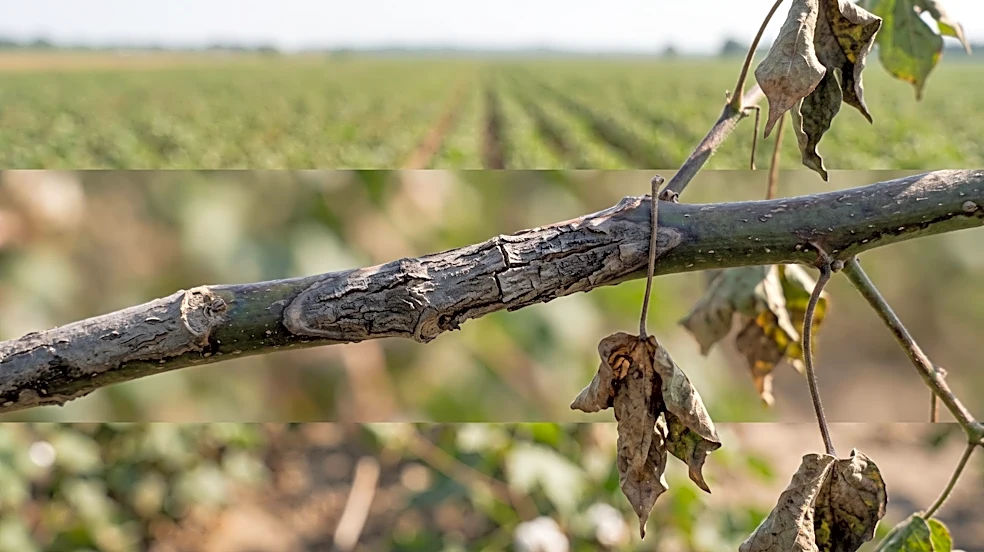
A newly identified disease, cotton stem canker and dieback, caused by the fungus Diaporthe ueckeri, has been discovered in U.S. cotton crops. This disease was first observed in northern Florida in 2024 by University of Florida plant pathologists at the North
Florida Research and Education Center (NFREC) in Quincy. The fungus, Diaporthe ueckeri, was previously known to cause cankers and root rots in other crops like cassava and soybean in Brazil. It shares similarities with Diaporthe phaseolorum, which is responsible for stem canker in soybeans. The development of cotton stem canker and dieback disease is exacerbated by hot weather followed by prolonged periods of rainfall, conditions under which it can lead to rapid dieback and plant death.
Why It's Important?
The emergence of a new disease like cotton stem canker and dieback poses a significant threat to the U.S. cotton industry. Cotton is a major agricultural commodity, and widespread outbreaks of this disease could lead to substantial crop losses, impacting farmers' livelihoods and the supply chain. The disease's preference for hot weather and extended rainfall periods suggests that regions with such climatic conditions, particularly in the Southern U.S., could be at higher risk. This could necessitate changes in farming practices, including the selection of resistant cotton varieties, improved soil fertility management, crop rotation, and the use of fungicides. The economic impact could extend beyond direct crop losses, potentially affecting prices for cotton products and requiring increased investment in disease management strategies.
What's Next?
Growers and agricultural researchers will need to focus on developing effective management strategies for this new disease. This includes consulting crop scouting records, selecting resistant cotton varieties, and implementing various pest and disease control measures such as seed treatments, foliar and soil-applied fungicides, and appropriate insect and weed management. Understanding the causal agent, Diaporthe ueckeri, is crucial for tailoring management practices, as fungal diseases require different approaches than bacterial or viral ones. Further research will likely be conducted to understand the disease's epidemiology, its potential spread, and to identify more robust control methods to protect U.S. cotton production.
Beyond the Headlines
The discovery of cotton stem canker and dieback highlights the ongoing vulnerability of agricultural systems to new and emerging plant pathogens, often exacerbated by changing environmental conditions. The fact that Diaporthe ueckeri was previously known in other crops and regions, like Brazil, suggests the potential for cross-continental pathogen transfer, possibly through trade or environmental factors. This underscores the interconnectedness of global agriculture and the importance of international collaboration in plant disease surveillance and research. The disease's preference for specific weather conditions also points to the potential influence of climate change on the prevalence and severity of agricultural diseases, requiring a proactive and adaptive approach to crop management and biosecurity.